Artificial Intelligence in Drug Discovery: Transforming the Future of Medicine
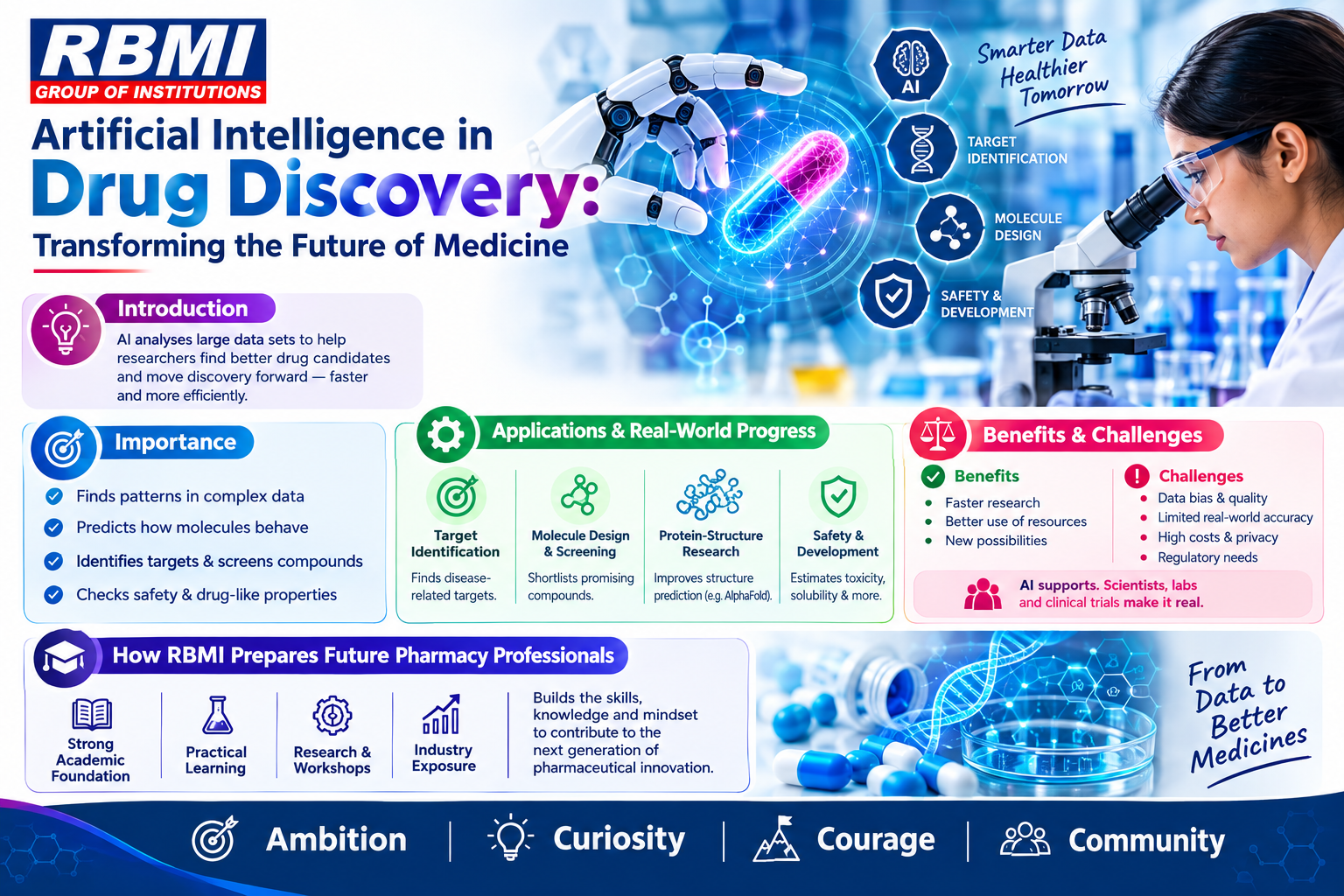
Discovering a new medicine is a complex process that can take many years and significant investment. Researchers must understand a disease, identify a suitable biological target, find a promising molecule, and evaluate its safety and effectiveness through laboratory studies and clinical trials. Artificial intelligence (AI) increasingly supports this work by analysing large amounts of biological and chemical data and helping researchers identify promising directions more efficiently.
Importance of AI in Drug Discovery
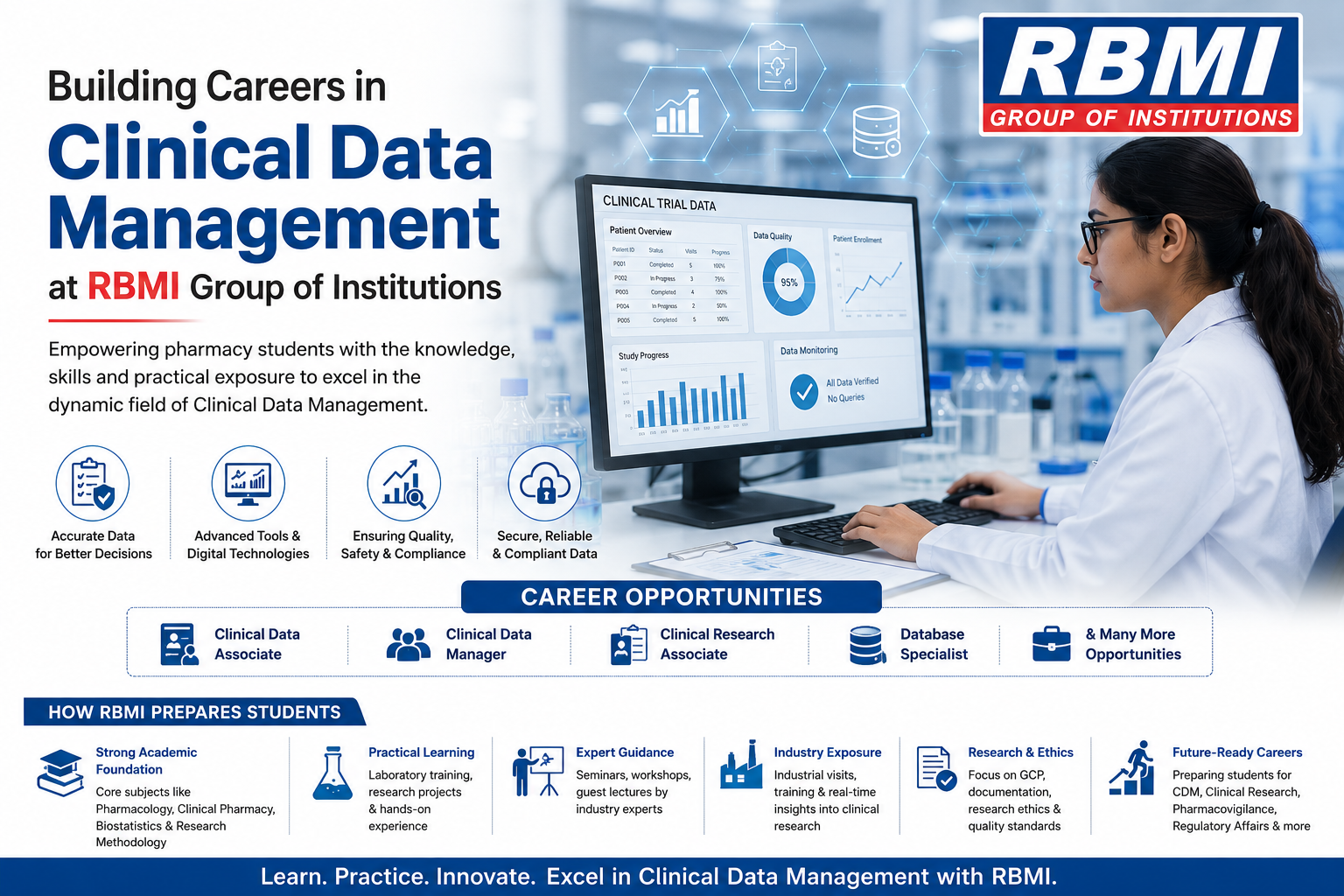
AI can help researchers recognise patterns in complex datasets, predict how molecules may behave, and prioritise compounds for further testing. Machine-learning tools may support the identification of disease-related targets, virtual screening of chemical libraries, prediction of drug-like properties, and analysis of potential safety concerns. These tools can make early-stage research more focused, but laboratory experiments and clinical research must always validate their predictions. Career Opportunities in Clinical Data Management.
Applications and Real-World Progress
Target identification: AI can analyse genetic, biological and clinical datasets to suggest targets that may be involved in disease. Molecule design and screening: Computational models can help scientists explore chemical structures and narrow large collections of compounds to candidates worth testing.
Protein-structure research: Tools such as AlphaFold have improved the prediction of protein structures, helping researchers investigate biological targets. This does not, by itself, prove that a treatment will be effective.
Safety and development: AI may help estimate selected properties, such as toxicity or solubility, although experimental confirmation remains essential.
Benefits and Challenges
Potential benefits include faster prioritisation of experiments, more efficient use of research resources, and the ability to explore molecules that might otherwise be overlooked. However, AI also has limitations. Poor-quality or biased data can lead to unreliable predictions, and results from computer models may not reflect what happens in the human body. High computing costs, transparency, data privacy, reproducibility and regulatory requirements also need attention. AI is a support toolnot a replacement for scientists, laboratory testing or clinical trials.
At RBMI Group of Institutions, pharmacy education provides a foundation in subjects such as pharmacology, pharmaceutical chemistry, biotechnology, biostatistics and research methodologyareas that help students understand the scientific principles behind drug discovery. Through research-oriented learning, practical activities, seminars, workshops and scientific presentations, students can develop analytical thinking, evidence-based reasoning and an understanding of emerging pharmaceutical technologies. These skills are valuable as the industry increasingly brings together medicine, data science and computational research.
Artificial intelligence is becoming an important tool in modern drug discovery. It can help researchers analyse data, prioritise potential drug candidates and investigate new scientific questions. Yet a promising prediction is only the beginning: medicines must still demonstrate quality, safety and effectiveness through rigorous testing. The next generation of treatments is likely to emerge from collaboration between AI tools, pharmaceutical scientists, clinicians and research institutions. By building strong scientific foundations and encouraging innovation, RBMI Group of Institutions supports the development of future professionals who can contribute responsibly to this evolving field.