

Bridging the Gap Between Classroom Knowledge and Clinical Practice at RBMI Pharmacy
Pharmaceutical education needs to go beyond textbooks and theoretical ideas in the constantly changing healthcare sector. The capacity to successfully apply classroom knowledge in actual clinical situations is the real test of a pharmacy student's competency. In addition to academic brilliance, RBMI Pharmacy College places a strong emphasis on training students to become competent healthcare practitioners who can confidently and compassionately handle contemporary clinical difficulties.
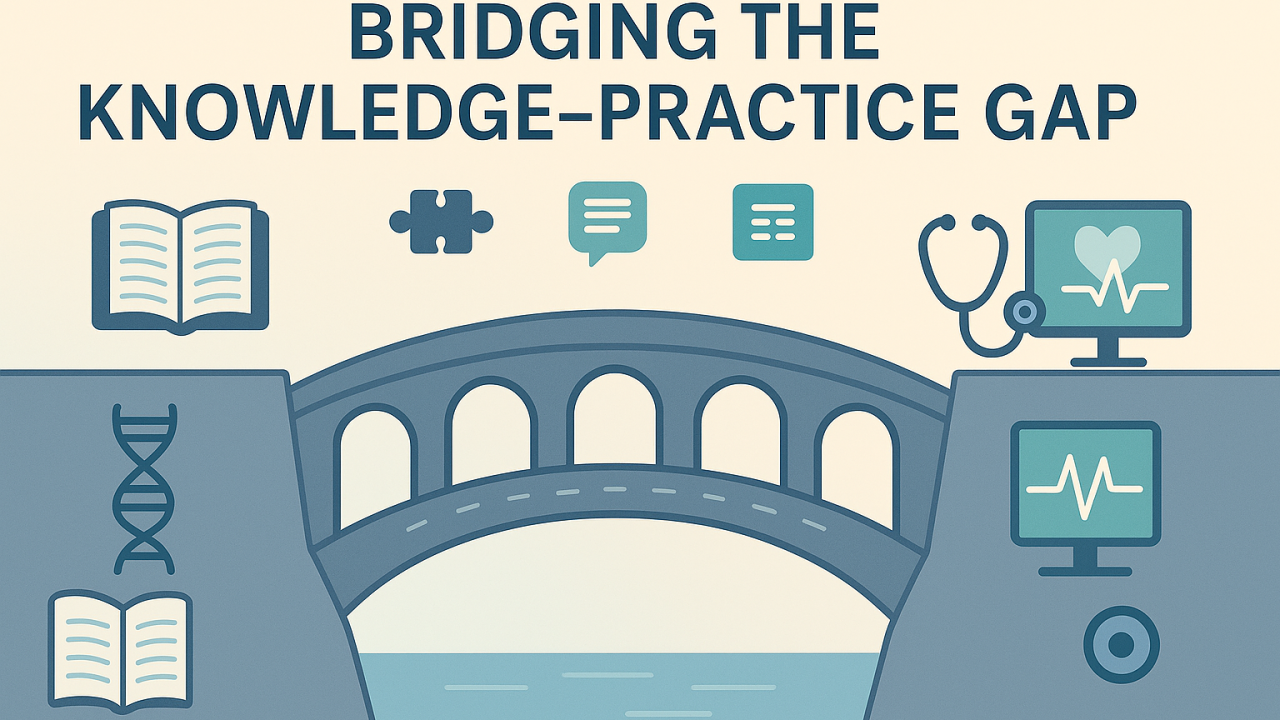
RBMI Pharmacy College is essential in bridging the gap between classroom knowledge and clinical practice since it integrates academic instruction with practical exposure.
The Need for Practical Learning in Pharmacy Education
The evolving field of pharmacy necessitates striking a balance between patient-centered care and scientific knowledge. Students require practical experience to comprehend how medications affect patient health in actual healthcare settings, even though classroom instruction provides a solid basis in disciplines like pharmacology, pharmaceutics, medicinal chemistry, and clinical pharmacy.
RBMI Pharmacy College recognizes this requirement and places a strong emphasis on experiential learning strategies that facilitate students' seamless transition from academic study to professional practice.
How RBMI Pharmacy College Bridges the Gap
Advanced Laboratory Training
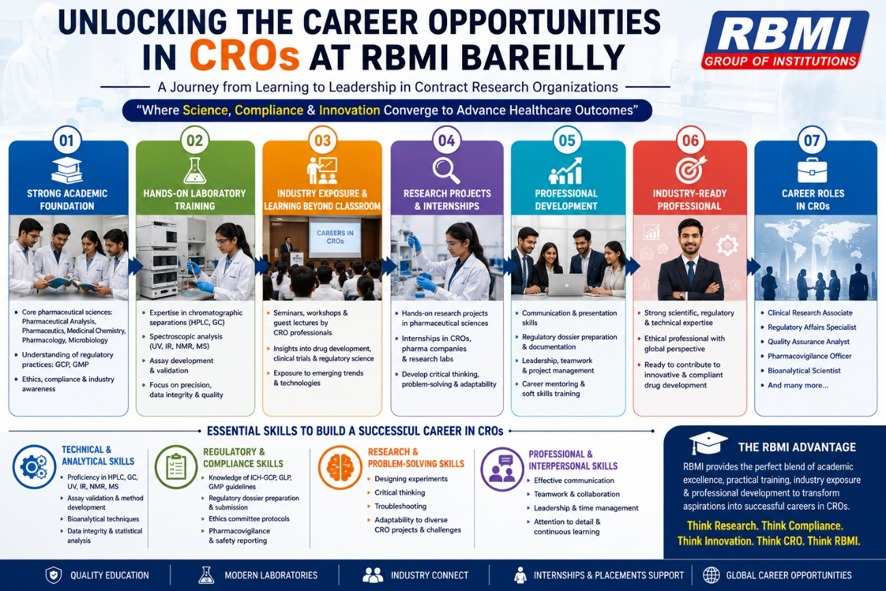
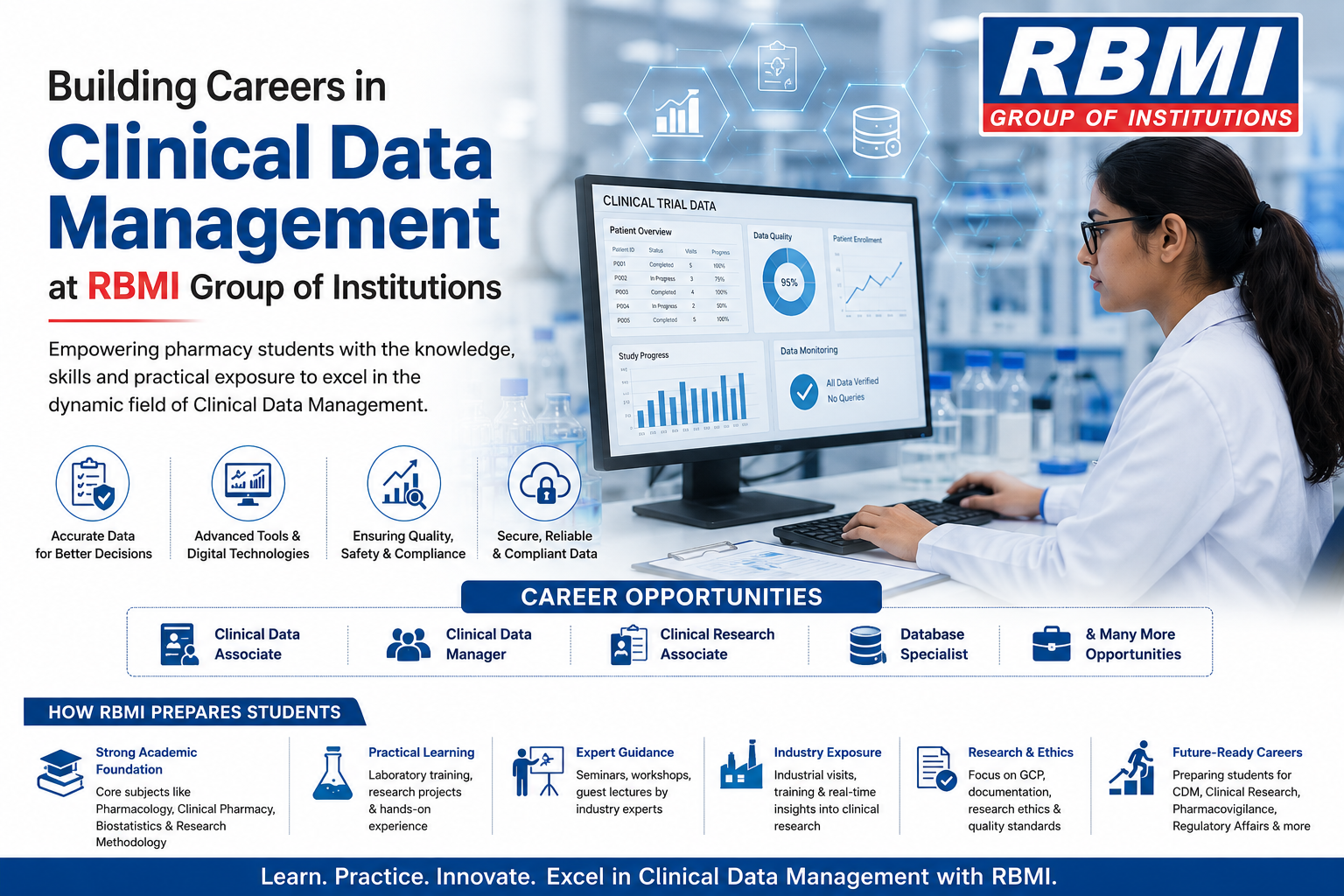
The well-equipped labs at RBMI Pharmacy College give students hands-on experience with pharmaceutical procedures, drug formulation procedures, and quality testing methodologies. Students can develop their technical and analytical skills by applying theoretical concepts in controlled practical settings during these lab sessions.
Clinical Exposure and Hospital Training
Participation in clinical observations, hospital visits, and healthcare training programs is encouraged by the college. Students gain a better understanding of patient care, drug administration, and the duties of healthcare professionals through exposure to authentic clinical settings.
Students gain an understanding of how pharmaceutical knowledge directly improves patient outcomes through these kinds of encounters.
Industry-Oriented Curriculum
RBMI Pharmacy College follows a curriculum designed to meet industry standards and current healthcare requirements. The integration of case studies, research projects, and practical assignments enables students to develop problem-solving abilities and clinical reasoning skills.
Experienced Faculty and Mentorship
The faculty members at RBMI Pharmacy College guide students not only academically but also professionally. Their mentorship helps students build confidence, improvecommunication skills, and understand ethical responsibilities in healthcare practice.
Workshops, Seminars, and Guest Lectures
Regular workshops and seminars conducted by healthcare experts, pharmacists, and industry professionals expose students to current pharmaceutical trends and clinical advancements. These interactive sessions bridge the gap between theoretical learning and practical healthcare applications.
Focus on Research and Innovation
The college encourages students to participate in research activities and scientific projects. Research-based learning develops critical thinking, enhances curiosity, and prepares students for evidence-based clinical practice.
Benefits for Students
The practical learning approach adopted by RBMI Pharmacy College offers several benefits to students:
• Improved confidence in clinical and professional settings
• Better understanding of patient care and medication therapy
• Enhanced communication and teamwork skills
• Stronger problem-solving and decision-making abilities
• Greater readiness for hospital, clinical, and pharmaceutical industry careers.
Preparing Future Healthcare Professionals
In today’s healthcare system, pharmacists play an important role in patient safety, medication counseling, and healthcare management. RBMI Pharmacy College understands the importance of producing professionals who are not only academically qualified but also clinically competent.
By creating opportunities for experiential learning, practical training, and industry interaction, the college ensures that students are prepared to face real-world healthcare challenges with professionalism and expertise.