


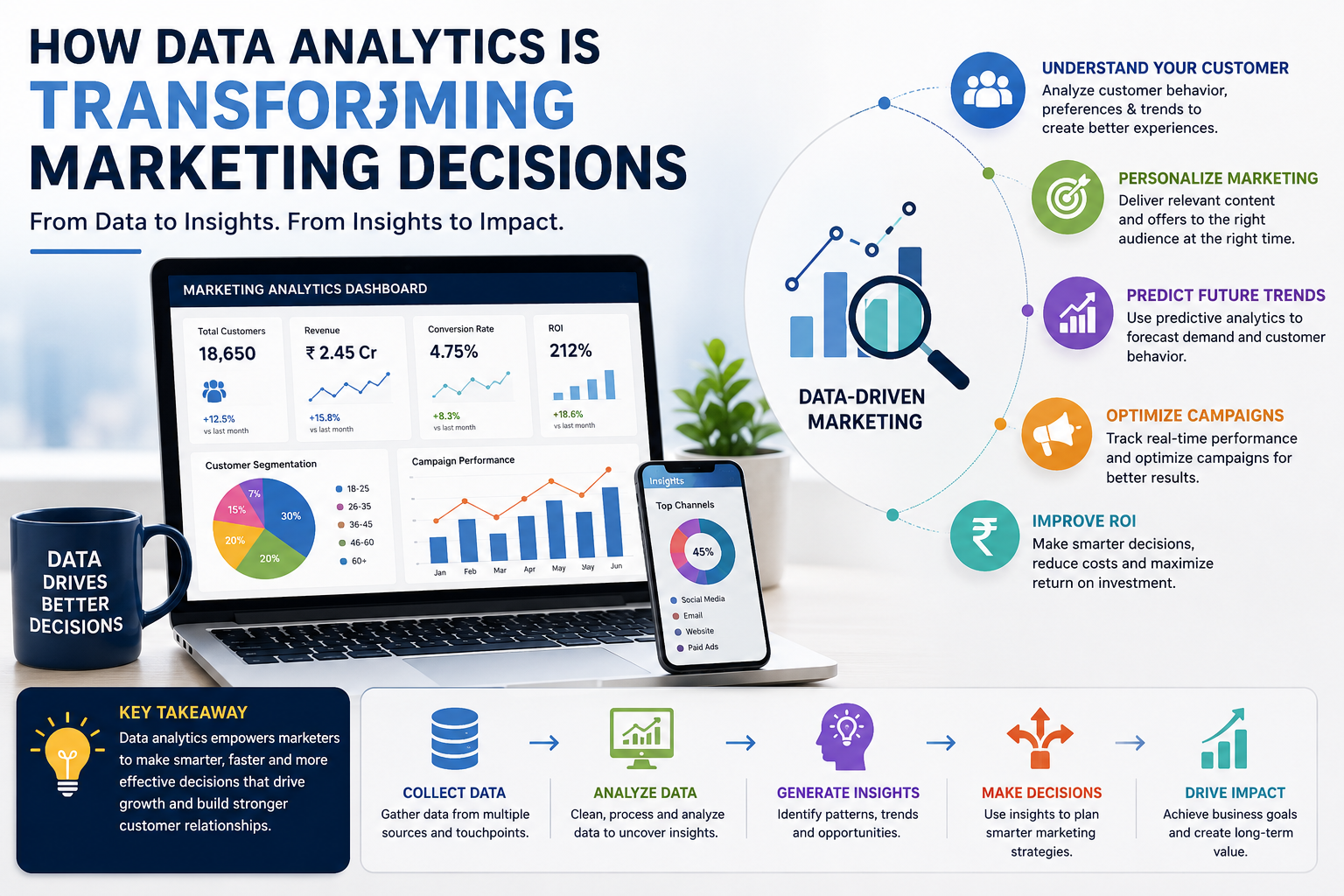
Data analytics transforming marketing decisions
In today's highly competitive business environment, marketing is no longer driven solely by intuition and experience. The emergence of data analytics has revolutionized the way organizations understand customers, design campaigns, and make strategic marketing decisions. By converting raw data into meaningful insights, data analytics enables businesses to make informed decisions that improve customer engagement, enhance efficiency, and maximize returns on investment.
Data analytics involves collecting, processing, and analyzing large volumes of customer and market data from various sources such as social media platforms, websites, mobile applications, customer relationship management (CRM) systems, and online transactions. This information helps marketers gain a deeper understanding of customer preferences, buying behaviour, demographics, and purchasing patterns.
One of the most significant contributions of data analytics is customer segmentation. Businesses can categorize customers into different groups based on age, location, interests, income, or purchasing habits. This allows marketers to create personalized campaigns tailored to specific customer needs. Personalized marketing not only improves customer satisfaction but also increases conversion rates and brand loyalty.
Data analytics also enhances decision-making through predictive analysis. By studying historical data and market trends, organizations can forecast future customer behaviour and demand patterns. For example, e-commerce companies use predictive analytics to recommend products, optimize inventory levels, and identify potential customers who are likely to make purchases. Such insights help businesses allocate resources more effectively and improve marketing outcomes.
Another important application is measuring campaign performance. Marketers can track key performance indicators (KPIs) such as website traffic, click-through rates, customer engagement, lead generation, and sales conversions in real time. This enables organizations to evaluate the effectiveness of marketing campaigns and make necessary adjustments promptly. As a result, marketing budgets can be utilized more efficiently, reducing waste and improving return on investment.
Social media analytics has further transformed marketing decisions. Companies can monitor customer sentiments, brand mentions, and online reviews to understand public perception of their products and services. These insights help organizations improve customer experience, strengthen brand reputation, and respond quickly to market changes.
However, businesses must also address challenges such as data privacy, cybersecurity, and ethical use of customer information. Organizations that maintain transparency and comply with data protection regulations are more likely to build customer trust.
In conclusion, data analytics has become a powerful tool for modern marketing. It empowers organizations to understand customers better, personalize communication, predict market trends, and measure campaign effectiveness. As technology continues to evolve, data-driven marketing will remain a key factor in achieving sustainable business growth and competitive advantage.