


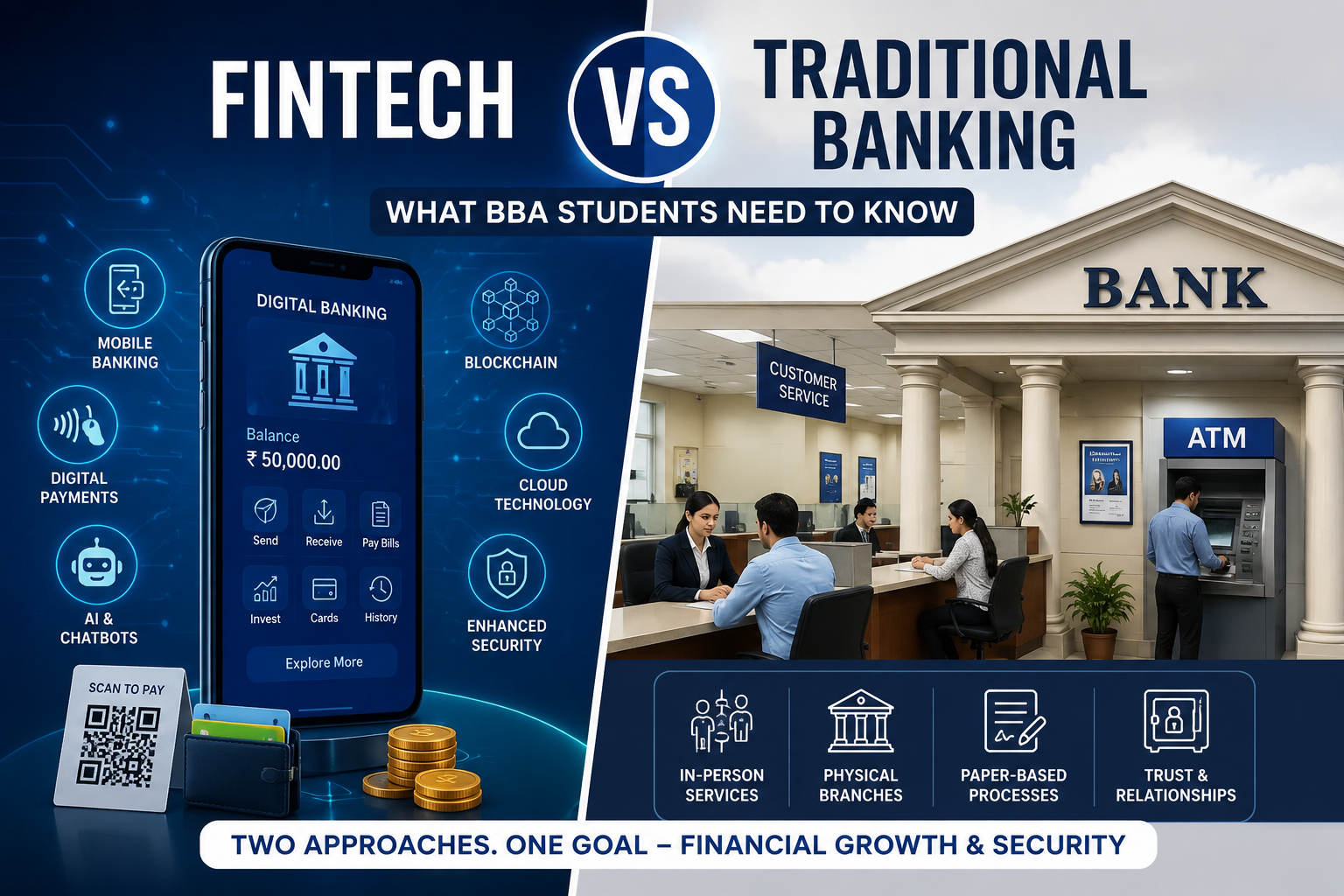
Fintech vs Traditional Banking: What BBA Students Need to Know
Fintech vs Traditional Banking: What BBA Students Need to Know
The banking world is changing fast. For BBA students planning careers in finance, management, or entrepreneurship, understanding how fintech differs from—and works with—traditional banking is essential. This knowledge helps you pick the right courses, internships, and colleges, whether you’re searching for colleges in Noida, colleges in Greater Noida, or the best colleges in Greater Noida and beyond.
What is fintech, and how is it different?
Fintech (financial technology) refers to technology-driven solutions that deliver financial services—think digital payments, robo-advisors, peer-to-peer lending, blockchain, and neobanks. Traditional banking includes long-established institutions that provide deposit-taking, lending, and other financial services through branch networks and legacy systems.
Key differences BBA students should know
- Speed and agility: Fintech startups focus on rapid iteration and customer-centric products. Traditional banks often move slower due to regulatory oversight and legacy processes.
- Technology-first vs product-first: Fintechs often build around a tech platform (APIs, mobile apps). Banks typically design products (loans, accounts) and then add digital channels.
- Cost structure: Fintechs can scale with lower physical overhead. Traditional banks maintain branches and large operational teams, which affects pricing and career roles.
Why this matters for BBA students
- Career opportunities: Fintech offers roles in product management, data analytics, UX design for finance, and growth marketing. Traditional banks continue to hire for relationship management, credit analysis, branch operations, and corporate banking.
- Skillsets: Fintech roles reward tech literacy—basic coding knowledge, data analytics, and familiarity with digital product metrics. Banks value financial accounting, credit evaluation, risk management, and customer relationship skills.
Popular program options to look for:
- BBA with specialization in Finance or Banking
- Courses or modules in fintech, digital payments, blockchain basics, and data analytics
- Internships with banks and fintech startups
- For students in Uttar Pradesh, options include bba colleges in UP and specifically bba colleges in Uttar Pradesh that combine theoretical grounding with practical exposure. If you’re also weighing alternatives, many institutes offer bca colleges in Noida and best bca colleges in Noida for students leaning toward technical roles, while bsc colleges in Noida provide a science-based route into analytics or economics.
Practical skills to build now
- Data literacy: Learn Excel, SQL basics, and data visualization. These are useful in both fintech analytics and bank reporting.
- Digital payments and UPI ecosystem: Understand payment rails and digital wallets—common fintech entry points.
- Credit and risk fundamentals: Know how lending decisions are made; this knowledge is invaluable in bank roles and for fintech lending products.
Conclusion
For BBA students, the choice isn’t only fintech versus traditional banking—it’s about where you want to apply your skills. Explore programs at reputable institutions, consider the best colleges in Greater Noida or the best BBA colleges in Noida, and build a hybrid skillset: finance fundamentals plus digital competence. That combination will make you attractive to legacy banks modernizing their platforms and nimble fintechs disrupting the market.