

FORENSIC SCIENCE IN NURSING
The nursing profession is rapidly evolving beyond traditional patient care. Modern nurses are expected to combine clinical expertise with ethical practice, legal awareness, and accurate documentation. One of the fastest-growing specialties that reflects this transformation is Forensic Science in Nursing, a field where healthcare professionals contribute to both patient care and the justice system. As incidents involving trauma, violence, abuse, and medico-legal cases continue to rise, the need for nurses with forensic knowledge is becoming increasingly important.
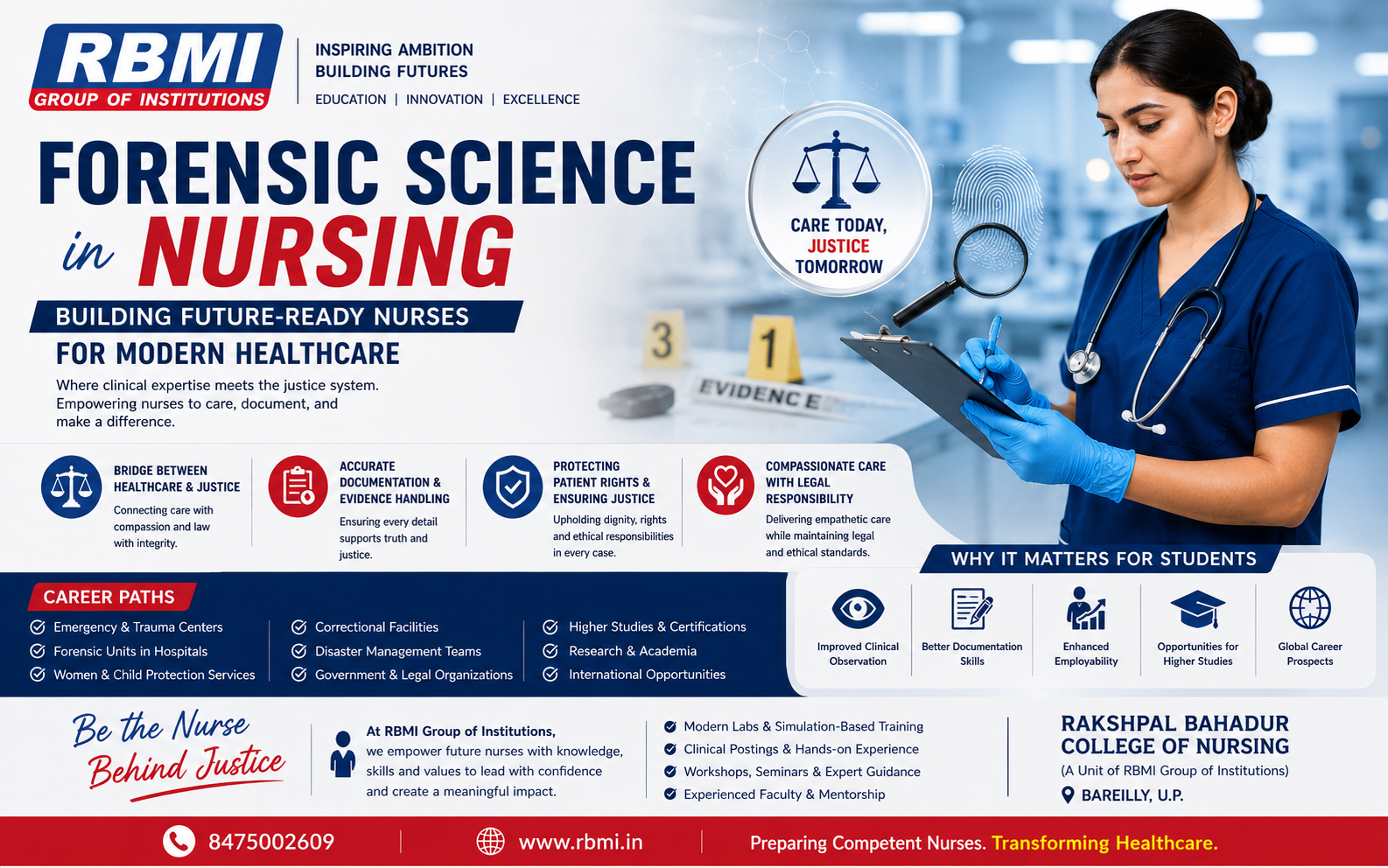
Forensic nursing is a specialized branch of nursing that applies medical knowledge to situations involving legal investigations. These professionals assess patients, document injuries, preserve evidence, maintain detailed medical records, and work alongside law enforcement and legal authorities while ensuring compassionate and patient-centered care. Their role helps protect patients' rights and ensures that medical evidence is collected and handled according to legal and ethical standards.
For nursing students, learning the principles of forensic science offers several professional advantages. It strengthens critical thinking, observation, communication, and clinical documentation skills—competencies that are valuable in every healthcare setting. It also helps students understand their legal responsibilities, patient advocacy, and ethical decision-making, preparing them to manage sensitive cases with confidence and professionalism.
The scope of forensic nursing continues to expand across healthcare systems. After completing a B.Sc. Nursing program, graduates with forensic knowledge can explore careers in emergency departments, trauma centers, forensic units, women's health services, child protection agencies, correctional facilities, disaster management teams, and government healthcare organizations. They may also pursue postgraduate education, research opportunities, and specialized certifications that enhance career growth both in India and internationally.
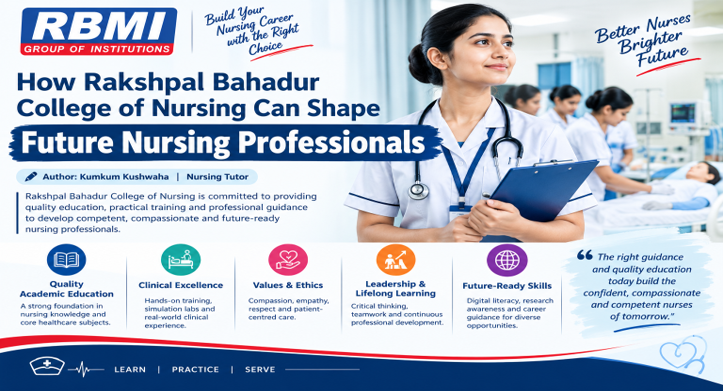
At Rakshpal Bahadur College of Nursing, under the RBMI Group of Institutions, students are encouraged to develop the knowledge and practical skills required for today's dynamic healthcare environment. The institution provides a balanced learning experience through modern nursing laboratories, simulation-based education, clinical training, workshops, seminars, and mentorship from experienced faculty members. This practical approach enables students to build confidence while applying theoretical concepts in real-life healthcare situations.
The institution is guided by its core values—Ambition, Curiosity, Courage, and Community—which inspire students to think critically, embrace innovation, develop leadership qualities, and work collaboratively. These values prepare future nurses to adapt to emerging specialties such as forensic nursing while maintaining the highest standards of patient care and professional ethics.
Studying forensic science not only broadens career opportunities but also equips nursing students with skills that improve patient safety, legal awareness, and evidence-based clinical practice. As healthcare continues to evolve, nurses with forensic expertise will play an increasingly significant role in multidisciplinary healthcare teams.
Choosing a nursing education that combines academic excellence with practical exposure can make a lasting difference in a student's professional journey. At Rakshpal Bahadur College of Nursing, students are empowered to become compassionate, competent, and future-ready healthcare professionals prepared to meet the changing demands of modern nursing.