

From Nursing Student to Professional Nurse
From Nursing Student to Professional Nurse: Complete Journey
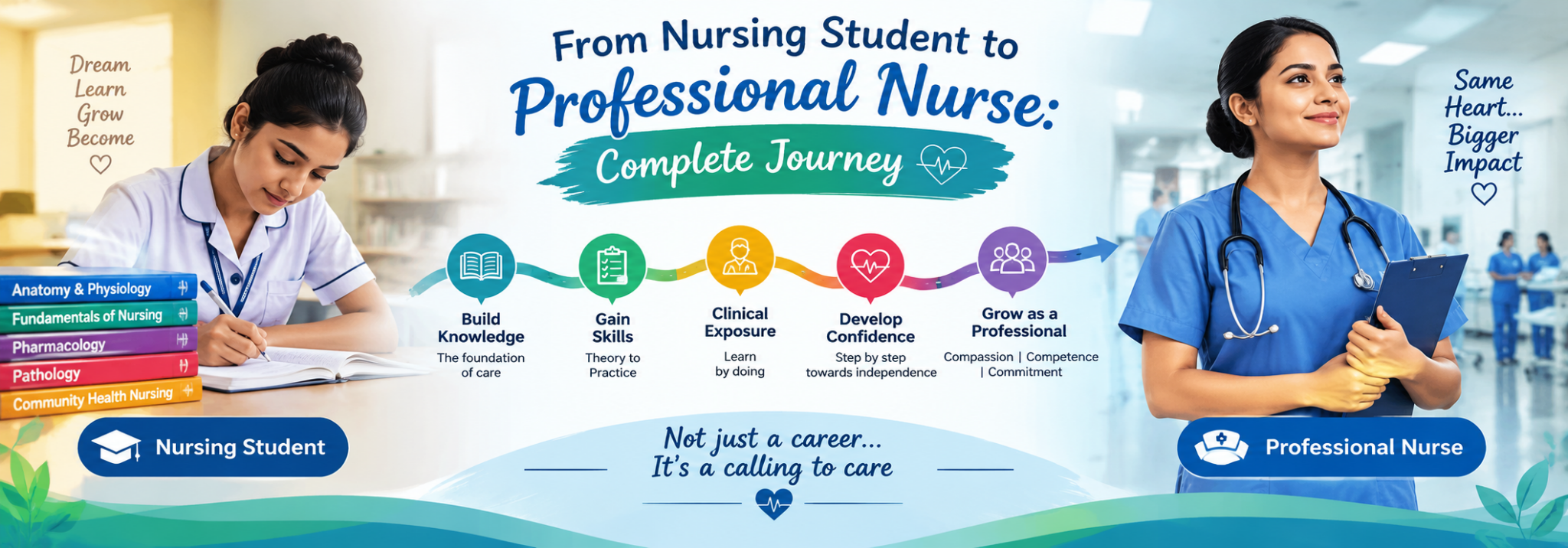
Becoming a professional nurse is a journey of education, clinical practice, responsibility, and continuous learning. A nursing student gradually develops the knowledge, skills, confidence, communication, and professional attitude required to provide safe and compassionate patient care.
Building the Foundation
The journey begins with nursing education, where students develop a foundation in subjects such as anatomy and physiology, fundamentals of nursing, pharmacology, medical-surgical nursing, child health nursing, mental health nursing, community health nursing, and obstetric nursing. This theoretical knowledge helps students understand diseases, treatments, patient needs, and nursing interventions.
From Classroom to Clinical Practice
Clinical training transforms theoretical knowledge into practical experience. Under supervision, nursing students learn to assess patients, monitor vital signs, provide nursing care, administer medications, assist with procedures, follow infection-prevention practices, communicate with patients, and document care accurately. Clinical exposure develops confidence, competence, discipline, and accountability.
Developing Professional Skills
Professional nursing requires more than clinical knowledge. Communication, critical thinking, teamwork, time management, observation, empathy, problem-solving, and accurate documentation are essential skills. These skills enable nurses to work effectively with patients, families, and healthcare professionals while maintaining quality and safety.
Patient-Centered Nursing
Professional nursing focuses on the whole person. Nurses consider patients’ physical, emotional, psychological, and social needs while maintaining privacy, dignity, and respect. Patient education, health promotion, communication, and emotional support are important to quality nursing care.
Becoming a Professional Nurse
After completing nursing education and fulfilling registration or licensure requirements, graduates begin professional practice. The transition from student to professional nurse brings greater responsibility for patient care, communication, documentation, teamwork, and decision-making within the nurse’s professional scope. New nurses continue to develop through experience, supervision, feedback, and learning.
Continuous Growth
Nursing education does not end with graduation. Professional nurses continue learning through clinical experience, continuing education, workshops, certifications, evidence-based practice, and advanced studies. Lifelong learning helps nurses maintain current knowledge and skills and adapt to changing healthcare needs.
The Role of Rakshpal Bahadur College of Nursing
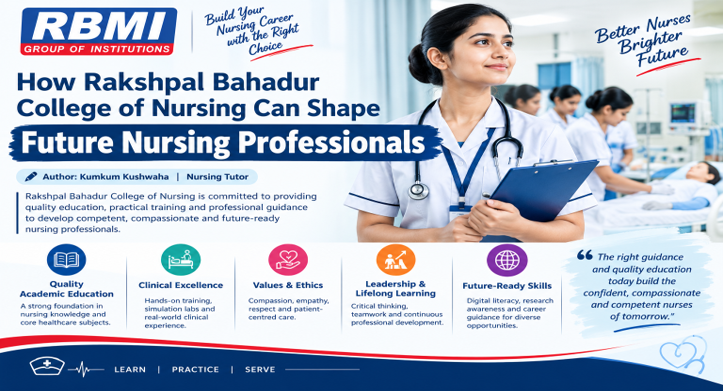
Rakshpal Bahadur College of Nursing plays an important role in supporting students as they progress toward professional nursing practice. The college provides academic learning along with practical and clinical exposure through its nursing programmes, including B.Sc. Nursing.
The institution supports students through clinical training, laboratories, simulation-based learning, workshops, seminars, and mentorship. These opportunities help students connect theory with practice and build clinical confidence.
The college also emphasizes communication, teamwork, professional ethics, leadership, and patient-centered care. Through guidance and mentorship, students are prepared to understand their responsibilities as healthcare professionals and contribute effectively to the healthcare team.
Conclusion
The journey from nursing student to professional nurse is built through knowledge, practice, compassion, accountability, and continuous improvement. Every classroom lesson, clinical experience, patient interaction, and professional challenge contributes to becoming a safe, skilled, ethical, and patient-centered nurse.
A nursing student learns to care; a professional nurse learns to care with knowledge, confidence, responsibility, and compassion.