

How Simulation Labs Are Transforming Nursing Education
Healthcare is evolving rapidly, and nursing education must evolve alongside it to prepare competent professionals for modern clinical practice. Today's nurses require strong theoretical knowledge, excellent technical skills, critical thinking, effective communication, and confidence in patient care. Traditional classroom teaching provides a solid academic foundation, but practical experience is equally important for developing professional competence. This is where simulation laboratories have transformed nursing education. By creating realistic clinical environments, simulation labs allow students to practice essential nursing procedures, improve decision-making, and build confidence before caring for real patients, making learning safer, more engaging, and highly effective.
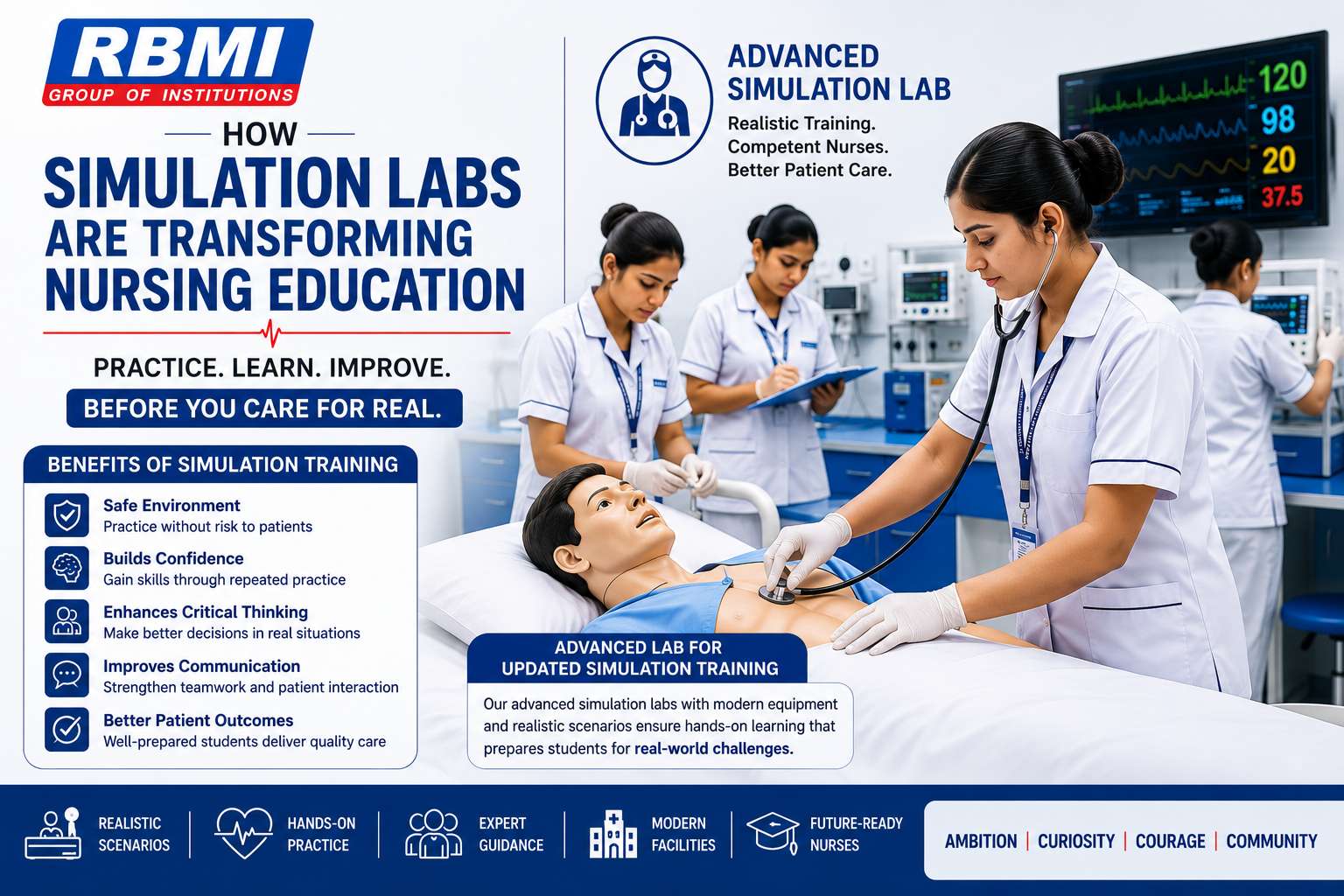
A simulation laboratory is a specially designed training environment that closely resembles hospitals, intensive care units, labour rooms, and community healthcare settings. These laboratories are equipped with advanced patient manikins, hospital beds, medical instruments, monitoring systems, emergency equipment, and clinical supplies that help students experience real-life healthcare situations. Instead of learning only through observation, students actively participate in patient assessment, medication administration, intravenous therapy, wound dressing, CPR, neonatal care, antenatal examinations, and emergency management. This practical exposure strengthens both knowledge and technical competence.
One of the greatest advantages of simulation-based learning is the opportunity for repeated practice without risking patient safety. Students can perform procedures multiple times, learn from mistakes, and improve their techniques under the guidance of experienced faculty members. Immediate feedback helps identify strengths and areas requiring improvement, encouraging continuous learning. This approach reduces anxiety during hospital postings and allows students to enter clinical practice with greater confidence and preparedness.
Simulation training also develops critical thinking and clinical reasoning. During realistic scenarios, students assess patient conditions, recognize priorities, make nursing decisions, and evaluate outcomes based on evidence-based practice. These experiences encourage independent thinking rather than simple memorization of procedures. As healthcare environments become increasingly complex, nurses who can analyze situations quickly and respond appropriately are better prepared to provide safe and quality patient care.
Another important benefit is the development of communication, leadership, and teamwork. Nursing students learn to coordinate with colleagues, communicate effectively with patients, document findings accurately, and collaborate with multidisciplinary healthcare teams. These professional skills are essential for delivering holistic and patient-centred care in hospitals and community settings.
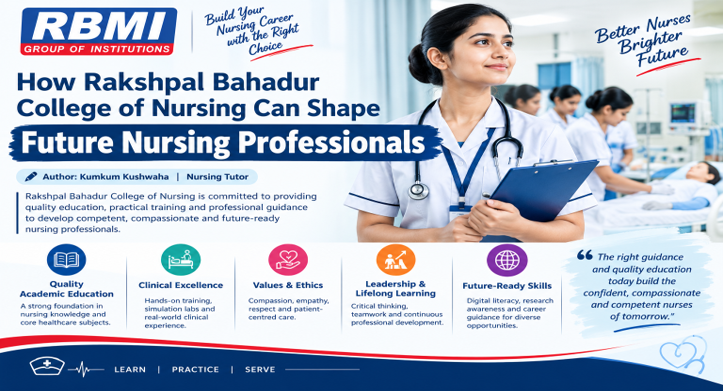
At Rakshpal Bahadur College of Nursing, Bareilly, simulation-based education is strengthened through advanced laboratories with updated simulation training facilities that reflect modern healthcare environments. Students receive hands-on learning in Fundamental Nursing, Obstetrics and Gynaecology, Child Health Nursing, Community Health Nursing, and Anatomy laboratories using contemporary equipment and realistic clinical scenarios. Guided by our four pillars—Ambition, Curiosity, Courage, and Community—we prepare future-ready nurses who combine clinical excellence with compassion, professionalism, and lifelong learning. By integrating innovative simulation technology with quality education, our institution empowers students to become confident healthcare professionals capable of meeting the changing needs of patients in India and across the world.