Industry 5.0 and Human–AI Collaboration
Introduction
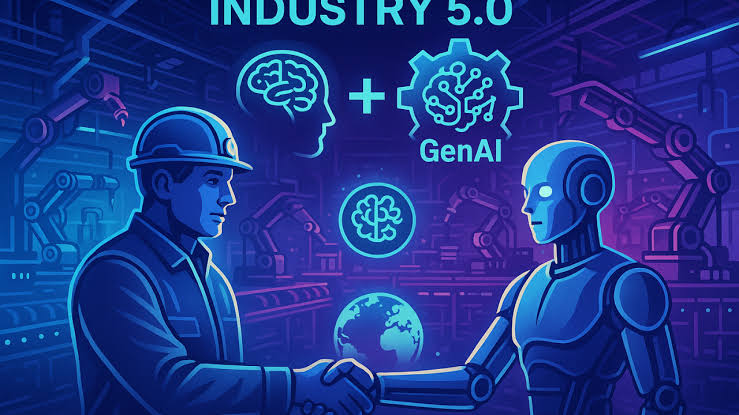
Industry 5.0 represents a paradigm shift from automation-centric manufacturing to a human-centric approach where humans and intelligent machines collaborate to achieve superior productivity, innovation, and sustainability. Unlike Industry 4.0, which primarily focuses on automation and interconnected systems, Industry 5.0 emphasizes the integration of human creativity, cognitive capabilities, and artificial intelligence (AI) technologies. Human–AI collaboration in smart manufacturing enables organizations to enhance operational efficiency, improve product quality, and create resilient production systems. AI-powered technologies such as machine learning, computer vision, collaborative robots (cobots), digital twins, and predictive analytics support workers in decision-making and complex problem-solving tasks. Despite these benefits, challenges related to workforce adaptation, data privacy, cybersecurity, ethical concerns, and skill gaps continue to hinder successful implementation.
The manufacturing sector is undergoing rapid transformation due to advancements in Artificial Intelligence (AI), the Internet of Things (IoT), robotics, cloud computing, and big data analytics. Industry 5.0 emerged as a response to these concerns by promoting collaboration between humans and intelligent machines. Human–AI collaboration forms the cornerstone of this approach, allowing humans and machines to complement each other's strengths. While AI offers speed, accuracy, and analytical capabilities, humans contribute creativity, emotional intelligence, ethical judgment, and adaptability. Together, they create a synergistic manufacturing environment capable of addressing complex industrial challenges.
Opportunities of Human–AI Collaboration in Smart Manufacturing
Enhanced Productivity
AI systems can perform repetitive and data-intensive tasks while humans focus on strategic activities. This division of labor increases productivity and operational efficiency.
Improved Decision-Making
Machine learning algorithms analyze vast datasets and provide actionable insights. Human managers can use these insights to make informed decisions.
Mass Customization
Industry 5.0 enables personalized products tailored to customer preferences while maintaining efficiency and quality standards.
Predictive Maintenance
AI-powered predictive maintenance reduces machine downtime by identifying potential failures before they occur.
Benefits:
- Reduced maintenance costs
- Increased equipment lifespan
- Improved operational continuity
Workplace Safety
Collaborative robots assist workers in hazardous environments.
Applications include:
- Heavy material handling
- Toxic chemical processing
- Precision assembly operations
Knowledge Enhancement
AI-based learning systems support employees by providing real-time information and training recommendations.
Sustainability and Resource Efficiency
AI optimizes energy consumption, minimizes waste generation, and enhances resource utilization, supporting sustainable manufacturing goals.
Innovation and Product Development
Human creativity combined with AI-driven analytics accelerates innovation and new product development processes.
Challenges of Human–AI Collaboration
Workforce Skill Gap Many employees lack the digital competencies required to work alongside AI systems.
Key Issues:
- Limited AI literacy
- Resistance to technological change
- Lack of training programs
Job Displacement Concerns
Employees often perceive AI as a threat to employment, leading to resistance and anxiety.
Data Privacy and Security Risks
Smart factories generate massive amounts of data that must be protected against cyber threats.
Major Risks:
- Data breaches
- Industrial espionage
- Unauthorized access
Ethical and Legal Challenges
AI decision-making may raise concerns regarding transparency, accountability, and bias.
High Implementation Cost
Industry 5.0 technologies require substantial investments in infrastructure, software, and workforce development.