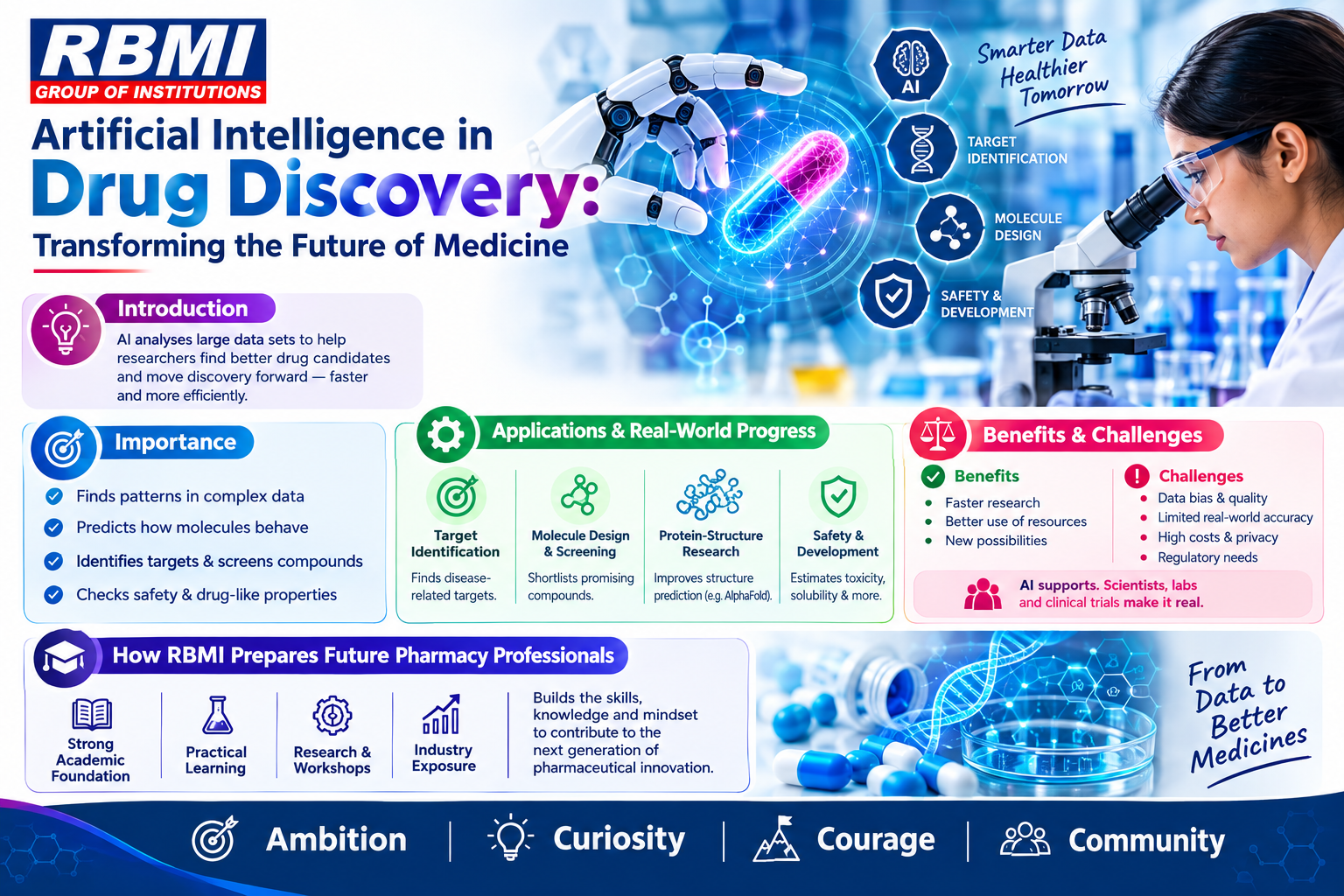
Pharmacovigilance in the Digital Era: AI-Based Adverse Drug Reaction Detection
Introduction to Pharmacovigilance in the Digital Era
Pharmacovigilance is the science of detecting, assessing, understanding, and preventing adverse effects of medicines. In the digital era, artificial intelligence (AI) helps analyse healthcare data more efficiently and supports the early identification of potential medicine-related risks.
Understanding Adverse Drug Reactions (ADRs) and Their Impact on Patient Safety
Adverse drug reactions are harmful or unwanted responses to medicines used at normal doses. They may cause complications, hospitalisation, or additional treatment. Early identification and reporting of ADRs are essential for improving patient safety and promoting rational drug use.
Artificial Intelligence: Transforming Modern Pharmacovigilance
AI uses computer algorithms to analyse large volumes of medical information. In pharmacovigilance, it can assist in reviewing safety reports, identifying patterns, organising data, and supporting decisions about medicine safety.
AI-Based Early Detection of Drug Safety Signals
AI can identify unusual patterns in adverse event reports and electronic health records. These patterns may indicate a potential safety signal that requires further investigation. Early detection can help experts assess risks and take appropriate preventive measures.
Role of Natural Language Processing in ADR Reporting
Natural Language Processing (NLP) is a branch of AI that helps computers understand human language. It can extract information about suspected medicines, symptoms, and adverse reactions from clinical notes, scientific articles, and patient reports, making safety-data processing more efficient.
Machine Learning for Adverse Drug Reaction Prediction
Machine learning identifies patterns in existing data to support the prediction and detection of potential adverse reactions. It can help prioritise safety reports and identify patients who may need closer monitoring. However, its predictions require clinical validation.
7. Benefits of AI in Drug Safety Monitoring and Pharmacovigilance
AI can improve the speed of data analysis, reduce repetitive work, assist in detecting safety signals, and help pharmacovigilance professionals manage large datasets. These benefits may support timely safety assessments and better patient outcomes when systems are appropriately validated.
Challenges, Ethical Concerns, and Data Privacy in AI-Based Systems
AI systems may produce incorrect results because of incomplete data, reporting errors, or algorithmic bias. Patient confidentiality and data security are also important concerns. Therefore, reliable data, ethical practices, regulatory compliance, and human supervision are necessary.
Future Perspectives: AI and Digital Transformation in Pharmacovigilance
The future of pharmacovigilance may include greater use of AI, electronic health records, digital ADR reporting, and real-world healthcare data. In India, these technologies could support the national pharmacovigilance programme and encourage healthcare professionals to report suspected adverse reactions.
Conclusion: Integrating AI with Human Expertise for Safer Medicines
AI is transforming pharmacovigilance by making drug safety monitoring more efficient and supporting the early detection of potential adverse reactions. However, AI cannot replace professional judgement. Combining digital technology with the expertise of pharmacists, clinicians, and regulatory professionals can help promote safer medicine use.