

Role of Technology in Modern Nursing Education
Technology has transformed nursing education by making learning more interactive, practical, and student-centered. As healthcare systems continue to adopt advanced medical technologies, nursing education must prepare students with the knowledge and skills required to work in modern clinical settings. From simulation-based training to digital learning platforms, technology helps nursing students build confidence, improve clinical competence, and deliver high-quality patient care.
One of the most significant advancements in nursing education is the use of simulation laboratories. High-fidelity mannequins can simulate real-life medical conditions such as cardiac arrest, respiratory emergencies, labor, and neonatal care. These simulations allow students to practice nursing procedures and emergency responses in a safe environment before working with actual patients. Repeated practice strengthens critical thinking, clinical decision-making, and teamwork while reducing the risk of errors during clinical postings.
Digital learning has also changed the way nursing students access education. Online learning platforms, recorded lectures, e-books, virtual classrooms, and interactive quizzes enable students to learn at their own pace. These resources provide flexibility and encourage self-directed learning, helping students stay updated with the latest healthcare practices and nursing guidelines.
Another important aspect of modern nursing education is training in Electronic Health Records (EHRs). Since most hospitals now use digital documentation systems, nursing students must learn how to accurately record patient information, prepare nursing care plans, and maintain confidential medical records. Familiarity with EHRs prepares students for professional healthcare environments and improves documentation skills.
Emerging technologies such as Artificial Intelligence (AI) and Virtual Reality (VR) are creating new opportunities in nursing education. AI-powered learning platforms provide personalized study recommendations, instant feedback, and performance analysis, allowing students to identify areas for improvement. Virtual Reality enables students to experience realistic clinical scenarios and explore human anatomy in an immersive environment, making complex concepts easier to understand and remember.
Technology has also expanded the scope of healthcare through telemedicine. Nursing students learn the basics of virtual patient consultations, remote monitoring, and digital health education. These skills are becoming increasingly important in improving healthcare accessibility, especially for people living in rural and underserved communities.
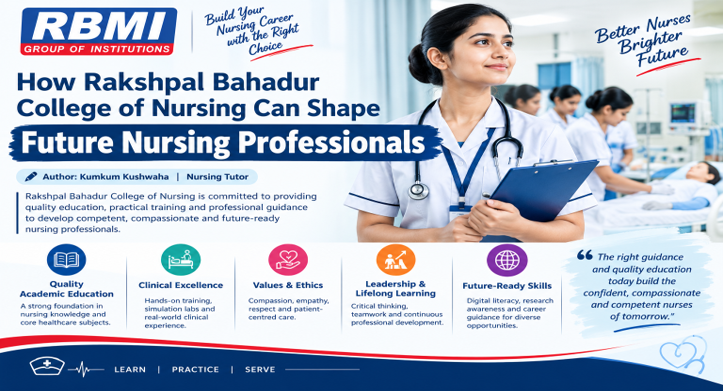
At Rakshpal Bahadur College of Nursing, technology-enhanced learning is integrated with quality nursing education to prepare students for the changing healthcare landscape. The institution emphasizes practical learning through advanced skill laboratories, simulation-based training, digital teaching resources, and evidence-based education. By combining classroom knowledge with modern technology and clinical exposure, students develop the competence and confidence needed to excel in their nursing careers.
In conclusion, technology has become an essential part of modern nursing education. It enhances learning, strengthens clinical skills, and prepares future nurses for technology-driven healthcare environments. Institutions like Rakshpal Bahadur College of Nursing recognize the importance of innovation in education and continue to equip students with the knowledge, practical experience, and professional skills needed to provide safe, effective, and compassionate patient care in today's rapidly evolving healthcare system.