

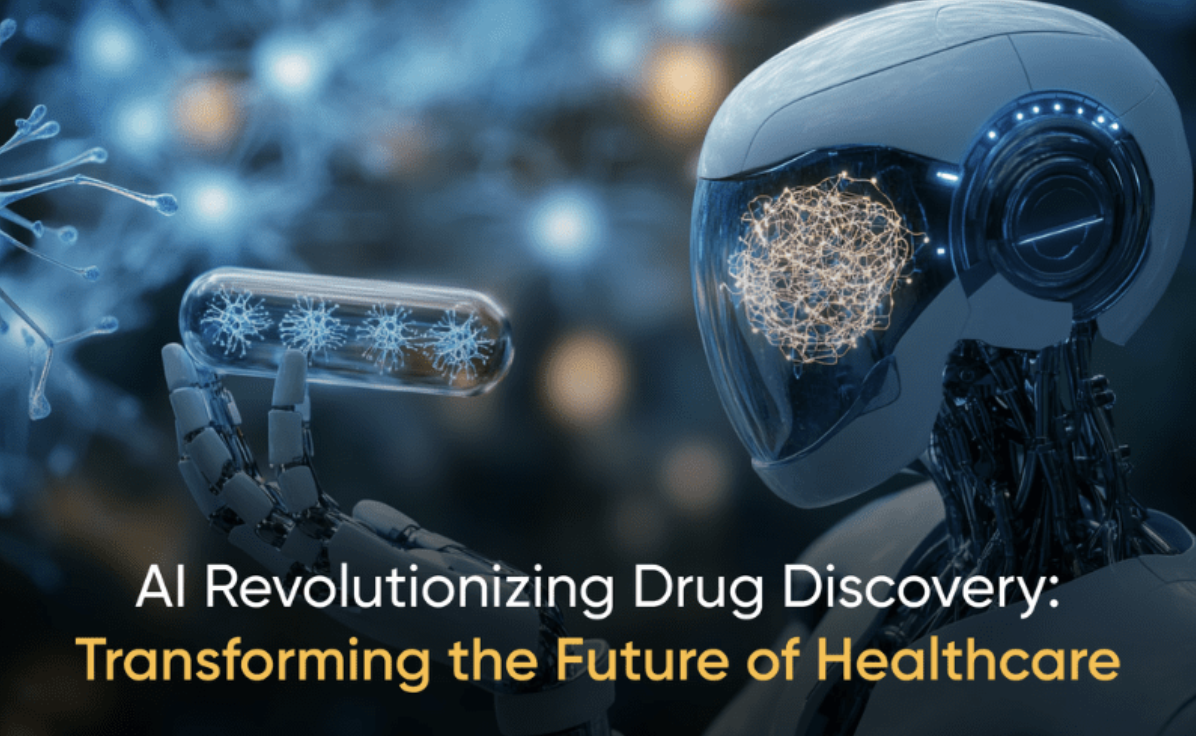
AI in Drug Discovery and Development: How Artificial Intelligence is Revolutionizing Healthcare and Pharmaceutical Research
Artificial Intelligence (AI) and Machine Learning (ML) are transforming the global healthcare and pharmaceutical landscape at a scale never seen before. Traditionally, developing a new drug took 10—15 years and cost billions of dollars because researchers had to sift through massive datasets, run lengthy lab experiments, and conduct time-consuming clinical trials.
Today, AI is accelerating this process by predicting drug interactions, identifying potential molecules faster, analyzing patient responses efficiently, and supporting personalized medicine. Pharma leaders like Pfizer, Novartis, AstraZeneca, Moderna, and Johnson & Johnson are already using AI in their research pipelines.
In simple terms — AI is reducing time, cost, and failure rate in drug development, making medicines safer, faster, and more affordable.
Why AI Matters in Drug Discovery
Drug discovery involves enormous complexity:
- Millions of chemical compounds must be screened
- Safety, toxicity, and effectiveness need analysis
- Clinical trials require accurate patient matching
AI helps automate these steps by analyzing huge datasets and making precise predictions — something almost impossible for humans alone.
1. AI in Identifying Drug Targets: The First Step in R&D
The first phase of drug discovery begins with identifying which part of the body — organ, gene, or protein — the medicine will act on. AI systems can scan biological databases, medical research papers, and genetic information to identify potential drug targets.
How AI Helps:
- Detecting disease-causing genes
- Predicting protein structure and function
- Identifying pathways that can be targeted
Platforms like DeepMind AlphaFold can predict protein structures with near-laboratory accuracy — a task that earlier took scientists months or years.
2. AI for Drug Screening and Molecule Design
Once a target is identified, thousands of potential molecules are tested to see if they could become medicines. Traditional screening methods were slow and costly.
AI changes this using:
- Virtual screening
- Molecular docking simulations
- Predictive modeling
Machine learning algorithms test molecular interactions virtually and shortlist promising candidates within days instead of months.
| Technology | Purpose |
| Generative AI models | Design completely new molecules |
| Quantum computing + AI | Predict interactions faster |
| ML algorithms | Rank molecules based on safety and effectiveness |
3. AI in Predicting Patient Reactions and Safety
Before a drug reaches clinical trials, researchers must ensure safety. AI models analyze toxicity, side effects, metabolism, and biological impact.
AI Can Predict:
- Drug performance across different age groups
- Side effects or allergic reactions
- Drug interactions with existing medications
- Genetic response variations
This supports precision medicine — where treatment is customized for each patient based on biological data.
4. AI in Clinical Trials: Faster, Smarter, and More Accurate
Clinical trials are often the longest and most expensive part of drug development. Many trials fail because the sample population is not appropriate or patient monitoring is inefficient.
AI assists with:
- Patient recruitment and matching
- Real-time monitoring of trial data
- Predicting trial outcomes using historical data
- Adaptive trial design
Wearable devices and AI health monitoring apps also collect live data, improving safety and result accuracy.
5. AI in Drug Repurposing
Sometimes, existing drugs can treat new diseases — as seen during COVID-19. AI analyzes clinical records, chemical structures, and biological pathways to identify medicines that may work for new conditions.
Example — AI supported evaluation of drugs like Remdesivir and Favipiravir for COVID-19 treatment.
Drug repurposing reduces cost and approval time, making it highly valuable for urgent global health needs.
6. Personalized Medicine Using AI
Every patient responds differently to medicines. AI helps develop personalized treatment plans based on:
- DNA and genetic data
- Electronic health records (EHR)
- Lifestyle and medical history
- Real-time health monitoring
Healthcare organizations use AI to design customized drug dosages — supporting safer and more effective treatment.
7. AI in Manufacturing and Supply Chain Optimization
Beyond research, AI supports:
- Smart production planning
- Quality control and digital inspection
- Predicting medicine demand
- Reducing wastage and improving logistics
Real-World Examples of AI in Drug Discovery
| Company / Platform | AI Contribution |
| Moderna | AI-designed mRNA vaccine strategy |
| Exscientia | AI-generated drug candidates in clinical trials |
| DeepMind AlphaFold | Protein structure prediction |
| IBM Watson Health | Data-driven drug repurposing |
Future of AI in Drug Development
Over the next decade, AI will continue transforming pharmaceutical research with autonomous laboratories, AI-driven genetic editing, robotics-enabled high-speed testing, and fully digital clinical trial ecosystems.
AI will not replace scientists — it will assist them, making drug research faster, more accurate, and more affordable.
Frequently Asked Questions (FAQ)
1. How does AI reduce drug development time?
AI speeds up research by predicting molecules, analyzing data, and automating screening. Tasks that took months can now be completed in days.
2. Does AI replace human researchers?
No. AI supports scientists, while human expertise remains essential for validation, decision-making, and ethical oversight.
3. Is AI used in Indian pharmaceutical companies?
Yes. Companies like Sun Pharma, Dr. Reddys, Cipla, and Biocon are integrating AI into research, manufacturing, and clinical trials.
4. Can AI predict side effects?
Yes. AI models analyze biological data, patient history, and chemical interactions to estimate risks before human testing.
5. How does AI help in clinical trials?
AI helps select suitable patients, monitor health data, analyze results, and predict outcomes — improving trial success rates.
6. What skills are required to work in AI-based drug research?
Key skills include Machine Learning, Bioinformatics, Chemistry, Data Science, Pharmacology, and AI tools such as Python, TensorFlow, and QSP modeling.