

Cervical Cancer Prevention and HPV Vaccination: Importance of Awareness, Screening, and Community
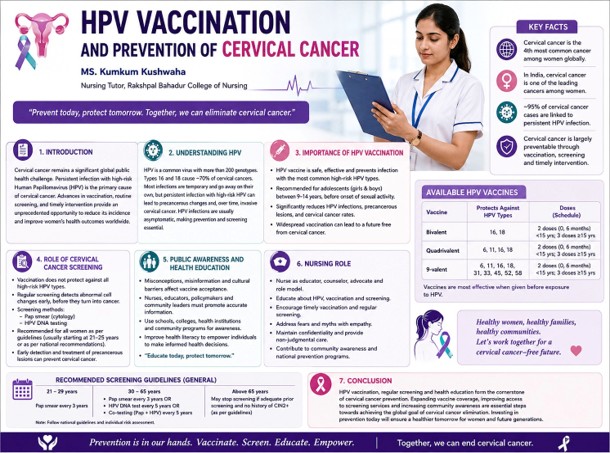
Cervical cancer remains a major global public health concern and is one of the leading causes of cancer-related morbidity and mortality among women. Despite its impact, it is largely preventable through Human Papillomavirus (HPV) vaccination, regular screening, early diagnosis, and timely treatment of precancerous lesions. Persistent infection with high-risk HPV types, particularly HPV 16 and HPV 18, accounts for nearly 70% of cervical cancer cases worldwide, emphasizing the need for effective prevention and awareness initiatives.
HPV is a common viral infection transmitted primarily through sexual contact. While most infections resolve spontaneously, persistent infection with oncogenic HPV strains can cause cervical precancerous changes that may progress to invasive cancer if untreated. Risk factors such as early sexual activity, multiple sexual partners, smoking, immunosuppression, and inadequate screening further increase susceptibility.
HPV vaccination is one of the most effective preventive measures against cervical cancer. It stimulates immunity against high-risk HPV types before exposure to the virus. The World Health Organization (WHO) recommends vaccination for adolescents aged 9–14 years. Available vaccines, including bivalent, quadrivalent, and nonvalent formulations, have demonstrated high effectiveness in reducing HPV infections and cervical precancerous lesions, making vaccination a cornerstone of cervical cancer prevention.
In India, cervical cancer prevention efforts have been strengthened through the introduction of CERVAVAC, the country’s first indigenous HPV vaccine. This initiative is expected to improve vaccine accessibility and affordability while supporting broader public health goals. Government agencies, healthcare institutions, and educational organizations continue to promote awareness of HPV vaccination and cervical cancer prevention.
Although HPV vaccination provides substantial protection, routine cervical cancer screening remains essential. Since current vaccines do not cover all cancer-causing HPV types, screening methods such as the Papanicolaou (Pap) smear, Visual Inspection with Acetic Acid (VIA), and HPV DNA testing are critical for early detection and intervention. Early diagnosis significantly improves treatment outcomes and reduces mortality.
Public awareness and health education are equally important in cervical cancer prevention. Misconceptions, cultural barriers, limited healthcare access, and inadequate knowledge often contribute to low vaccination and screening uptake. Evidence-based education and community engagement can enhance awareness, encourage preventive practices, and promote timely healthcare-seeking behaviour.
Healthcare professionals, particularly nurses, play a key role in prevention and control efforts. Their responsibilities include educating communities, promoting vaccination and screening, addressing misinformation, providing counselling, and supporting informed health decisions. As frontline healthcare providers, nurses are instrumental in implementing community-based awareness and prevention programs.
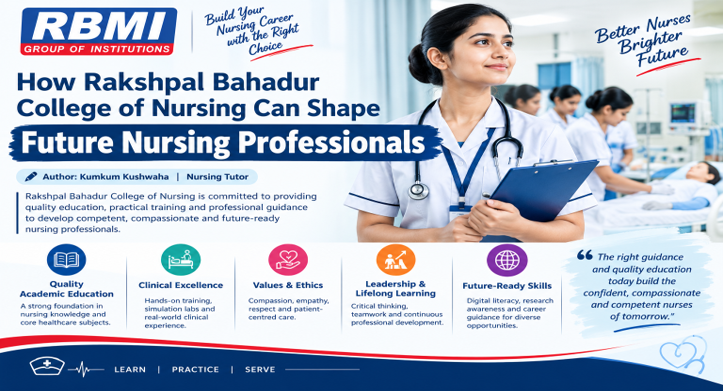
In this regard, RBMI (Rakshpal College of Nursing, RBMI Group of Institutions) is committed to advancing health awareness, preventive healthcare, and community well-being through education, research, and outreach activities. RBMI encourages students and healthcare professionals to participate in health education programs, vaccination awareness campaigns, and community screening initiatives aimed at reducing the burden of cervical cancer.
Achieving the global goal of cervical cancer elimination requires a comprehensive approach that integrates vaccination, regular screening, public education, and equitable access to healthcare services. Through sustained efforts and collaborative action, the burden of cervical cancer can be significantly reduced, improving the health and well-being of women worldwide.