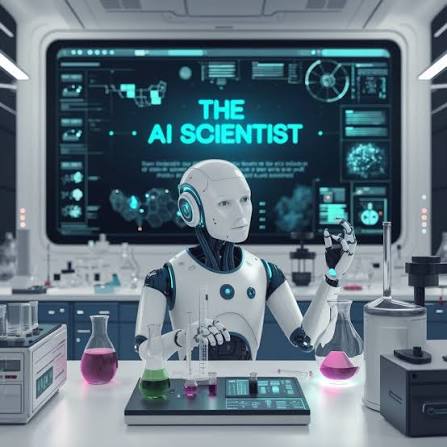



From Experiment to Report: AI Tools for Every Stage of Scientific Research
Transforming Scientific Discovery Through Artificial Intelligence
Scientific research involves several stages, including identifying research questions, reviewing literature, designing experiments, collecting data, analysing results, and preparing reports. Traditionally, these activities require considerable time, effort, and technical expertise. Today, Artificial Intelligence (AI) is transforming the research process by helping researchers work more efficiently, organize information, and explore scientific problems. When used responsibly, AI can support researchers at every stage, from the initial idea to the final report.
1. Research Planning and Topic Selection
The first step in scientific research is identifying a meaningful research question. AI tools can help researchers brainstorm ideas, refine research objectives, formulate hypotheses, and identify potential research gaps. Tools such as ChatGPT can assist in developing research questions and organizing preliminary research plans.
However, researchers must independently evaluate the originality, feasibility, and scientific relevance of their ideas.
2. Literature Review and Information Gathering
Reviewing existing scientific literature helps researchers understand previous discoveries and identify unanswered questions. AI-powered research tools, such as Elicit and Semantic Scholar, can help locate relevant papers, summarize research findings, and organize information from scientific publications.
Researchers should always verify references, read original studies, and distinguish established evidence from AI-generated interpretations.
3. Experimental Design and Data Collection
AI can support experimental planning by helping researchers identify variables, develop procedures, and consider possible sources of error. In laboratories, machine-learning systems and intelligent sensors can assist with monitoring experiments, automating repetitive tasks, and collecting measurements.
Nevertheless, experiments must follow established scientific methods, ethical guidelines, and laboratory safety standards. AI suggestions should never replace proper experimental validation.
4. Data Analysis and Interpretation
Data analysis is one of the most important stages of scientific research. AI tools can help identify patterns, detect anomalies, classify observations, and interpret complex datasets. Tools such as Python-based machine-learning libraries, MATLAB, and statistical software can support calculations, visualization, and modelling.
AI can also help researchers understand analytical methods and troubleshoot code. However, results must be checked for errors, bias, and unsupported conclusions. Correlation should not automatically be interpreted as causation.
5. Scientific Writing and Report Preparation
After analysing the results, researchers communicate their findings through reports, research papers, presentations, and posters. AI tools can assist with grammar correction, sentence clarity, outlining, summarization, and formatting.
Researchers remain responsible for the accuracy of their writing, proper citations, originality, and compliance with publication guidelines. AI-generated references and claims must be independently verified, and AI use should be disclosed when required.
Conclusion
AI is becoming a valuable assistant throughout the scientific research process. It can reduce repetitive work, improve productivity, and help researchers focus on critical thinking and discovery. However, it cannot replace scientific curiosity, experimental evidence, ethical responsibility, or human judgement.
The future of scientific research lies in combining human intelligence with artificial intelligence to make discoveries more efficient, reliable, and meaningful.