

The Role of AI in Physics, Chemistry, and Biology Education
Transforming Science Learning Through Artificial Intelligence
Artificial Intelligence (AI) is transforming education by making learning more interactive, personalized, and accessible. In science education, AI provides new opportunities for students to understand complex concepts, solve problems, and explore scientific phenomena. From mathematical calculations in Physics to molecular structures in Chemistry and biological processes in Biology, AI is becoming a valuable learning assistant for students and teachers.
AI in Physics Education
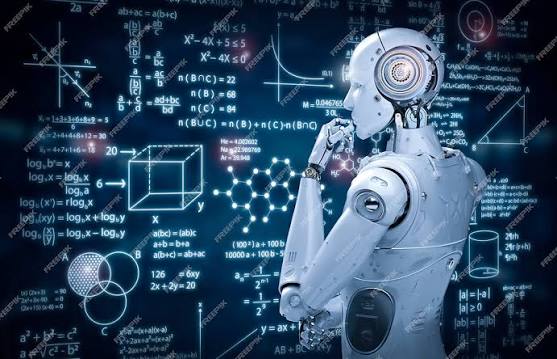
Physics involves mathematical calculations, theoretical concepts, and the study of natural phenomena. Many students find topics such as mechanics, electricity, magnetism, and quantum physics challenging. AI-powered educational tools can simplify these concepts through step-by-step explanations, numerical problem-solving guidance, simulations, and visual representations.
For example, students can explore projectile motion, electric circuits, and wave behaviour using digital simulations. AI can also generate practice questions according to students' learning levels and help identify areas requiring improvement. However, students must develop their own mathematical reasoning rather than depending entirely on AI-generated solutions.
AI in Chemistry Education
Chemistry requires an understanding of chemical reactions, molecular structures, periodic trends, and laboratory procedures. AI can support students by explaining reaction mechanisms, visualizing three-dimensional molecular structures, and helping them understand complex chemical concepts.
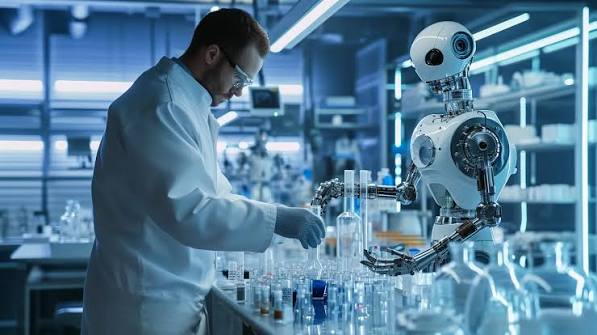
AI-based tools can also assist with balancing chemical equations, identifying patterns in chemical data, and practising numerical problems related to chemical kinetics and thermodynamics. Virtual laboratories allow students to explore certain experiments in a simulated environment before performing practical work.
Nevertheless, AI-generated chemical information must be verified, and digital simulations should complement—not replace—real laboratory experiments and proper safety practices.
AI in Biology Education
Biology deals with living organisms, cellular structures, genetics, evolution, and ecosystems. AI can make these topics easier to understand through interactive diagrams, animations, and personalized explanations.
Students can use AI-assisted resources to study DNA replication, protein synthesis, photosynthesis, and the human body's organ systems. AI also supports the analysis of biological datasets and helps researchers identify patterns in genetics, disease diagnosis, and biodiversity.
These applications demonstrate how AI connects classroom learning with modern scientific research.
Benefits and Challenges of AI in Science Education
AI offers several benefits, including instant feedback, personalized learning, improved accessibility, and opportunities for independent exploration. Teachers can also use AI to prepare quizzes, develop learning materials, and identify students' learning difficulties.
However, AI may sometimes generate inaccurate information. Excessive dependence can weaken critical thinking and independent problem-solving skills. Therefore, students should verify information using textbooks, scientific literature, laboratory observations, and guidance from teachers.
Conclusion
AI is reshaping Physics, Chemistry, and Biology education by making scientific learning more engaging and accessible. Yet, successful science education requires curiosity, experimentation, analytical thinking, and human guidance.
The future of science education lies not in replacing teachers with AI, but in combining human intelligence with artificial intelligence to create smarter, more effective learners.