

Technology Is Not Defined by Machines
Technology Is Not Defined by Machines
The Power of Human Ingenuity
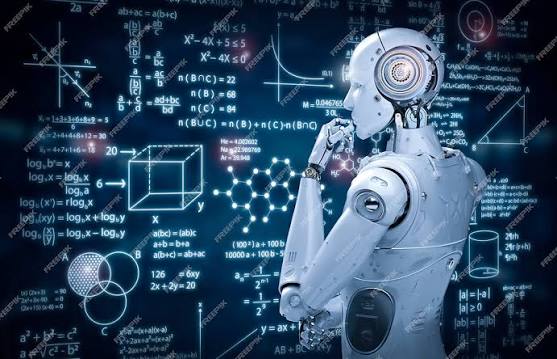
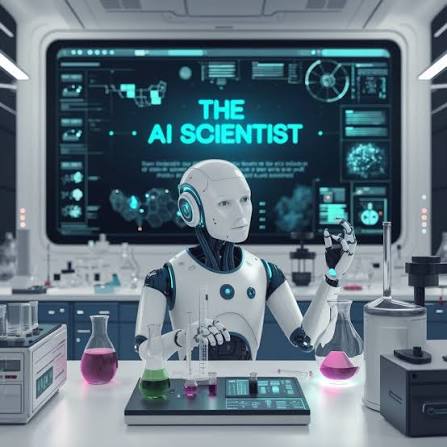
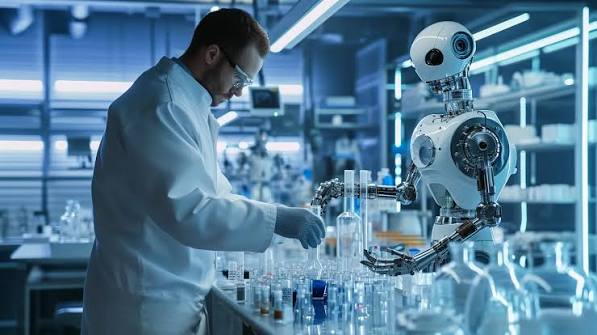
In an age of artificial intelligence, automation and sophisticated machinery, the most important technology remains the human capacity to question, discover and innovate.
From Curiosity to Scientific Discovery
In an era increasingly shaped by artificial intelligence, automation, and sophisticated machinery, technology is often perceived as synonymous with advanced equipment. Yet, at its core, technology is not defined by the complexity of the machines we build. It is defined by the quality of human thought, curiosity, scientific inquiry, and the ability to transform ideas into meaningful solutions.
The history of science offers compelling evidence of this principle. The work of Sir C. V. Raman, one of India’s most distinguished physicists, demonstrates how a simple observation can evolve into a discovery of global significance.
In 1921, while observing the blue waters of the Mediterranean Sea, C. V. Raman was struck by a seemingly simple question: “Why does the sea appear blue?”
Rather than accepting the phenomenon as an ordinary fact of nature, Raman pursued the question through systematic observation and experimentation. His curiosity eventually led to years of research and culminated in the discovery of the Raman Effect, for which he was awarded the Nobel Prize in Physics in 1930.
When Ideas Become Technology
Raman’s research into the scattering of light ultimately gave rise to Raman spectroscopy, a powerful analytical technique used to identify and study materials. Today, its applications extend across diverse fields, including medicine, chemistry, pharmaceuticals, materials science, art conservation, and space research.
This journey—from a simple observation to a globally relevant scientific technology—illustrates the true power of innovation. The most consequential technologies often begin not with a machine, but with a question.
Building Technological Self-Reliance
For a nation, technological progress cannot be measured merely by the number of advanced technologies it imports. Sustainable progress depends on the ability to create, adapt, and develop technologies using indigenous knowledge, resources, and talent.
Developing solutions to local challenges through domestic research and innovation has benefits that extend beyond technological independence. It strengthens scientific institutions, creates opportunities for young researchers, encourages entrepreneurship, and builds confidence in a country’s intellectual capabilities.
The Broader Meaning of Innovation
The example of C. V. Raman therefore remains highly relevant in today’s technology-driven world. His work reminds us that scientific progress does not always require enormous resources. What it requires first is curiosity, intellectual courage, disciplined research, and the willingness to explore the unknown.
Conclusion
The future of technology will undoubtedly involve increasingly powerful machines, but its most important driving force will remain human ingenuity.
Great technology does not begin with a machine. It begins with an idea.
And behind every transformative idea is a mind willing to ask a fundamental question: “Why?”
“The future belongs not merely to those who build better machines,
but to those who ask better questions.”