The Future of AI in Cybersecurity: Transforming the Digital Defence Landscape
In today's rapidly evolving digital world, Artificial Intelligence (AI) is transforming almost every industry, and cybersecurity is no exception. With the increasing use of digital platforms, cloud computing, online transactions, and smart devices, cyber threats are becoming more sophisticated. Traditional security systems are often unable to detect and prevent advanced cyberattacks. This is where Artificial Intelligence plays a crucial role in strengthening digital security.
How AI is Transforming Cybersecurity
AI is revolutionizing cybersecurity by enabling systems to identify, analyze, and respond to potential threats in real time. Unlike traditional security tools that depend mainly on predefined rules, AI-powered systems can analyze massive amounts of data, recognize unusual patterns, and detect suspicious activities.
Some important applications of AI in cybersecurity include:
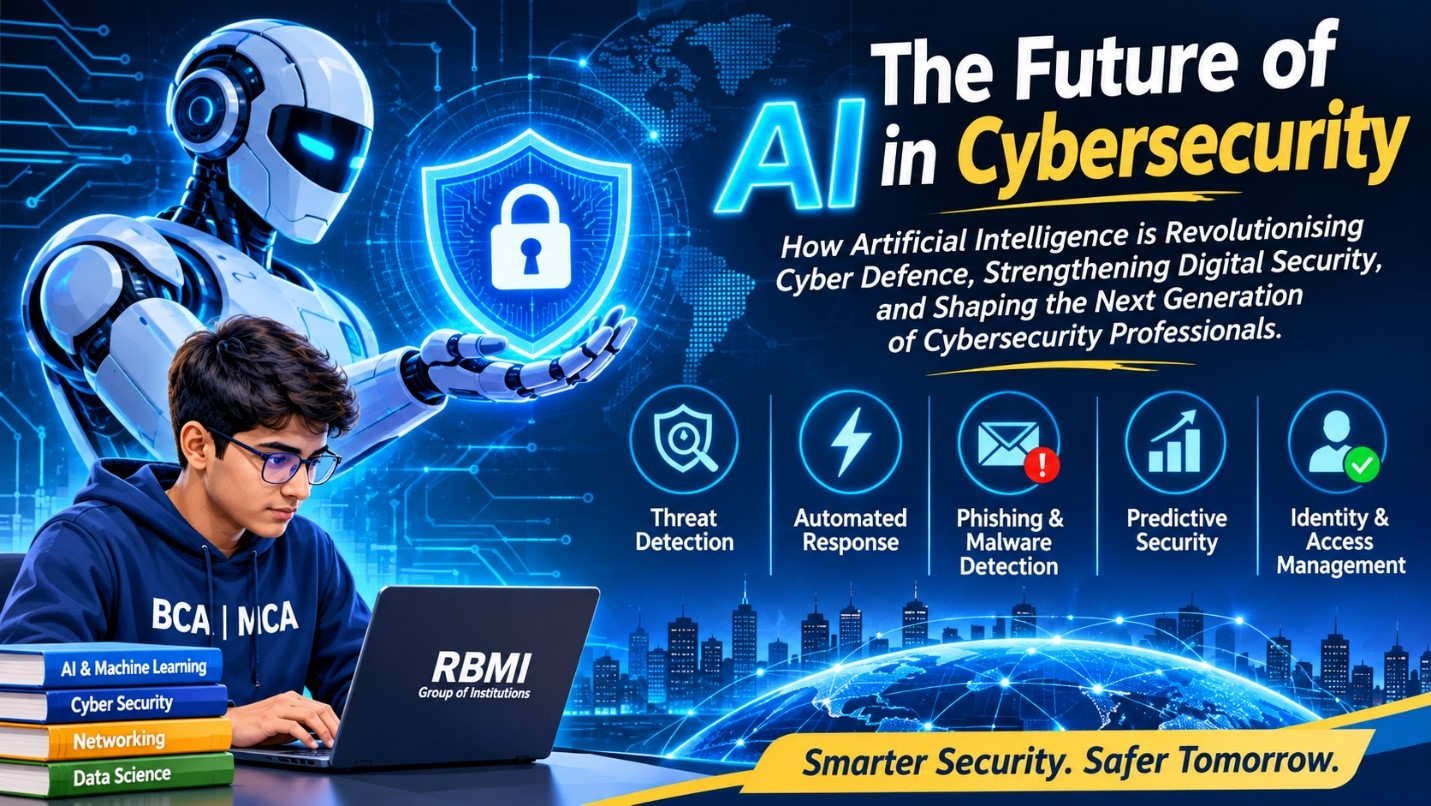
- Threat Detection: AI can identify unusual network activities and detect potential cyberattacks before they cause significant damage.
- Automated Incident Response: AI-powered security systems can automatically respond to threats, block suspicious activities, and reduce response time.
- Phishing and Malware Detection: Machine learning algorithms help identify fraudulent emails, malicious links, and harmful software.
- Predictive Security: AI can analyze previous cyberattack patterns to predict potential vulnerabilities and emerging threats.
- Identity and Access Management: AI supports advanced authentication systems by identifying unusual login behaviour and preventing unauthorized access.
Challenges and Risks of AI in Cybersecurity
Although AI offers numerous advantages, it also introduces new challenges. Cybercriminals are increasingly using AI to develop sophisticated phishing attacks, generate malicious content, automate hacking attempts, and bypass traditional security mechanisms.
Therefore, organizations must focus on developing responsible AI systems, protecting sensitive data, and continuously updating their cybersecurity strategies. Human expertise and ethical practices will remain essential in ensuring digital safety.
Role of BCA and MCA Students in the Future of AI Security
The future of cybersecurity offers exciting opportunities for students pursuing BCA and MCA programmes. Students can prepare themselves by developing strong fundamentals in programming, networking, databases, operating systems, machine learning, and information security.
At RBMI Group of Institutions, BCA and MCA students can explore emerging technologies through practical learning, coding activities, technical workshops, cybersecurity awareness programmes, and AI-based projects. Such initiatives can help students develop the technical knowledge and problem-solving skills required to meet future industry challenges.
Conclusion
Artificial Intelligence is not just the future of cybersecurity; it is becoming an essential part of digital protection. As cyber threats continue to evolve, the combination of AI technology and human intelligence will play a significant role in building a safer digital environment.
For aspiring IT professionals, understanding AI and cybersecurity today means preparing to become the digital security leaders of tomorrow.
Dhanish Tandon
HOD- CSA