AI IN LABORATORIES FROM DATA COLLECTION TO DISCOVERY
Laboratories have always been the foundation of scientific progress, where curiosity transforms into experiments and experiments lead to discoveries. However, the integration of Artificial Intelligence (AI) is changing the traditional laboratory environment. Today, laboratories are moving beyond manual observation and conventional data collection towards intelligent analysis, predictive research and faster scientific discoveries.
Traditionally, researchers spent considerable time collecting samples, recording observations, conducting repetitive experiments and analysing results. Although these processes remain essential, they can be time-consuming and vulnerable to human error. AI-powered technologies are now helping scientists automate routine activities, organise complex datasets and identify patterns that may remain unnoticed through conventional methods.
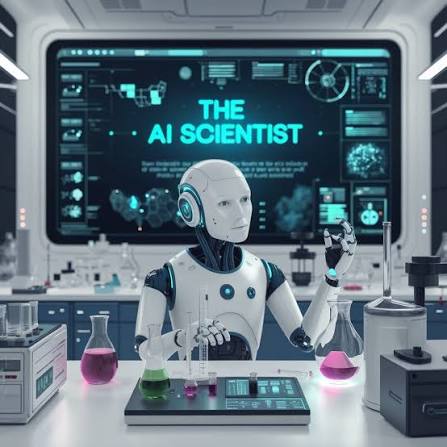
One of the most significant contributions of AI is its ability to process enormous volumes of scientific data within seconds. In chemistry, AI can predict molecular structures, analyse chemical reactions and identify promising compounds for developing new materials and medicines. In biology, machine learning algorithms assist in studying genetic information, analysing microscopic images and understanding complex biological processes. Similarly, in physics, AI supports experimental simulations, astronomical observations and advanced material research.
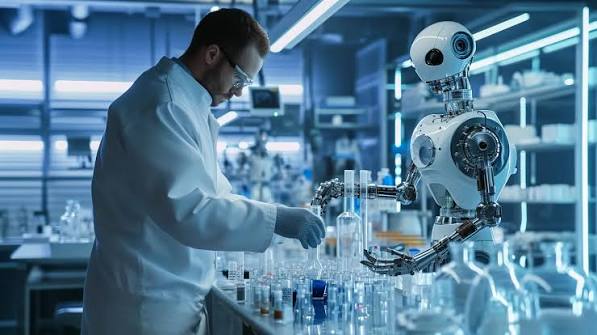
Modern laboratories are also witnessing the emergence of smart instruments, robotic systems and automated testing facilities. AI-enabled equipment can monitor experimental conditions, detect unusual variations and recommend adjustments. Robotics can perform repetitive tasks such as sample preparation, liquid handling and chemical analysis with remarkable consistency. This allows researchers to devote more time to critical thinking, interpretation and innovation.
Another promising development is predictive experimentation. Instead of conducting hundreds of experiments through trial and error, researchers can use AI models to identify the most promising experimental conditions. This approach can reduce research costs, save valuable time and improve the efficiency of scientific investigations.
However, AI-driven laboratories also present challenges. Data accuracy, cybersecurity, algorithmic bias, equipment costs and ethical concerns require serious attention. Most importantly, AI-generated results must be scientifically validated. Artificial Intelligence can assist researchers, but it cannot replace human curiosity, scientific judgement and responsibility.
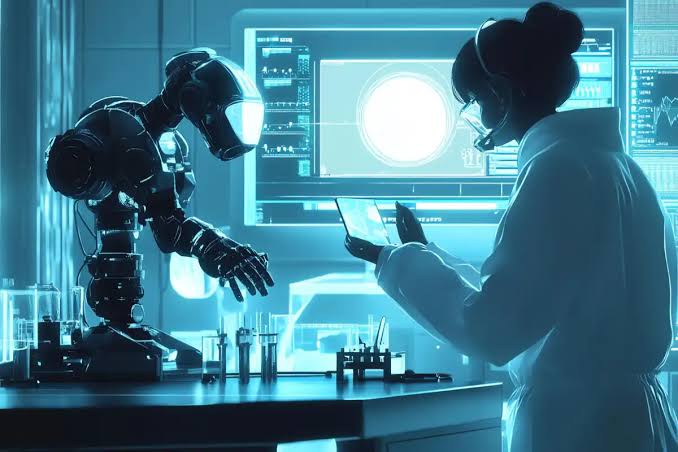
The future of laboratories will depend on effective collaboration between human intelligence and artificial intelligence. Students and researchers must therefore develop scientific knowledge alongside digital literacy, analytical thinking and AI-related skills.
Ultimately, AI is not simply transforming how laboratories collect data; it is redefining how discoveries are made. The laboratory of tomorrow will be smarter, faster and more interconnected, where human imagination works alongside intelligent machines to address complex scientific challenges.
The real revolution begins when data stops being merely recorded and starts generating discoveries.