Artificial Intelligence in Chemistry Education
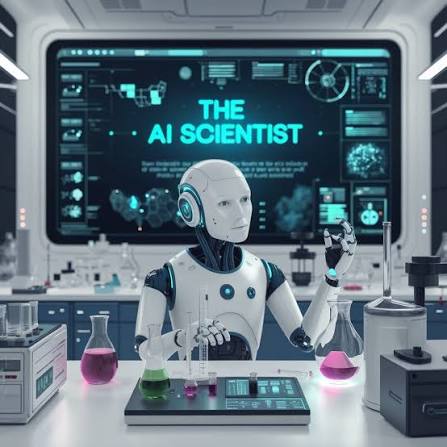
Can Artificial Intelligence explain a complicated chemical reaction, visualise a molecule in three dimensions, solve a numerical problem step by step or simulate a laboratory experiment? Absolutely! Chemistry education is entering an exciting new era where Artificial Intelligence (AI) is making learning more interactive, accessible and application-oriented.
Traditionally, learning Chemistry involved textbooks, classroom lectures, laboratory experiments and numerical problem-solving. These methods remain essential, but AI is adding new dimensions to scientific education. It is helping students move beyond memorisation towards conceptual understanding, analytical thinking and scientific exploration.
How Is AI Transforming Chemistry Education?
AI is becoming a powerful learning assistant for chemistry students in several ways:
· 1. Simplifying Complex Concepts: Understand challenging topics such as chemical bonding, thermodynamics, electrochemistry and chemical kinetics through simple explanations and practical examples.
· 2. Visualising Molecular Structures: Explore molecular geometry, hybridisation, orbital interactions and three-dimensional molecular arrangements using digital visualisation tools.
· 3. Understanding Chemical Reactions: Learn organic reaction mechanisms, functional groups, isomerism and reaction pathways through step-by-step explanations.
· 4. Solving Numerical Problems: Practise calculations involving molarity, normality, pH, equilibrium constants and thermodynamics with guided solutions.
· 5. Exploring Virtual Laboratories: Understand experimental procedures and scientific principles through interactive simulations before performing actual laboratory experiments.
· 6. Analysing Spectroscopic Data: Develop an understanding of IR, NMR, UV-Visible and mass spectroscopy through digital learning resources and AI-assisted interpretation.
· 7. Smart Examination Preparation: Generate MCQs, quizzes, revision notes, practice questions and topic-wise assessments.
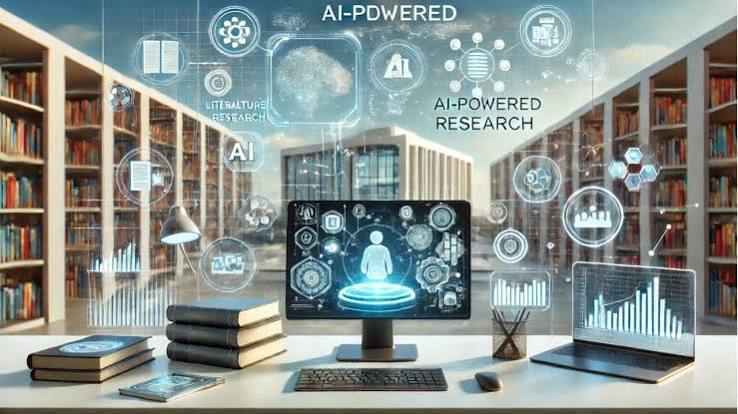
· 8. Supporting Research Activities: Explore scientific literature, identify research topics and understand emerging developments in chemical sciences.
Useful Digital and AI Tools for Chemistry Students
Students can explore these platforms to strengthen their learning:
1. ChatGPT: Concept explanations, personalised learning and academic assistance.
2. ChemDraw: Drawing chemical structures and reaction mechanisms.
3. MolView: Exploring molecular structures in 2D and 3D.
4. PubChem: Accessing chemical properties and molecular information.
5. Wolfram Alpha: Scientific calculations and mathematical problem-solving.
6. PhET Simulations: Interactive chemistry experiments and concept visualisation.
What Skills Should Future Chemists Develop?
· AI literacy and prompt engineering.
· Critical thinking and analytical reasoning.
· Laboratory and experimental skills.
· Digital data analysis.
· Scientific communication and research ethics.
· Independent learning and problem-solving.
Challenges: Use AI Wisely!
AI-generated answers may contain incorrect information or misleading explanations. Students must verify scientific facts, consult authentic textbooks and perform actual laboratory experiments. AI should support teachers and students, not replace scientific judgement or practical learning.
The Future of Chemistry Education
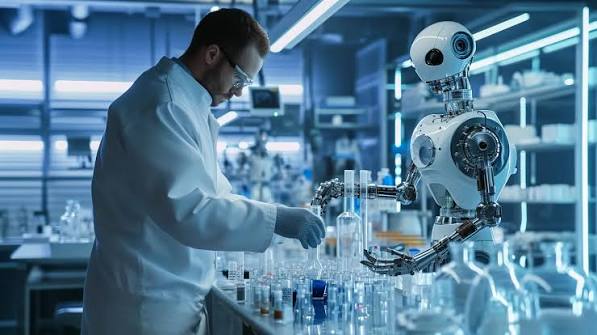
The chemistry classroom of tomorrow will combine human intelligence, digital technologies, laboratory experimentation and AI-powered learning.
Remember: Don't just memorise chemical equations; understand the science, visualise the molecules, experiment with ideas and use AI to discover new possibilities!
Learn Chemistry. Embrace AI. Think Scientifically. Innovate for Tomorrow.