The Future of AI In STEM Learning
Imagine a classroom where students explore the human body through virtual simulations, solve complex mathematical problems with intelligent assistants, conduct virtual chemistry experiments and understand engineering designs using AI-powered applications. This is not a distant dream; it is the emerging reality of STEM education.
STEM stands for Science, Technology, Engineering and Mathematics. These disciplines form the foundation of innovation, industrial development and scientific progress. Today, Artificial Intelligence (AI) is transforming how these subjects are taught, learned and applied.
How Is AI Transforming STEM Education?
AI is moving education beyond traditional textbooks, lectures and examinations towards personalised, interactive and skill-oriented learning.
- 1. Personalised Learning: AI tools analyse learning requirements and provide customised explanations, practice questions and learning resources according to individual student needs.
- 2. Smart Science Learning: Students can understand complex concepts in Physics, Chemistry and Biology through interactive simulations, visualisation and AI-assisted explanations.
- 3. Intelligent Mathematics: AI-powered applications help students solve equations, understand mathematical concepts, visualise graphs and practise numerical problems.
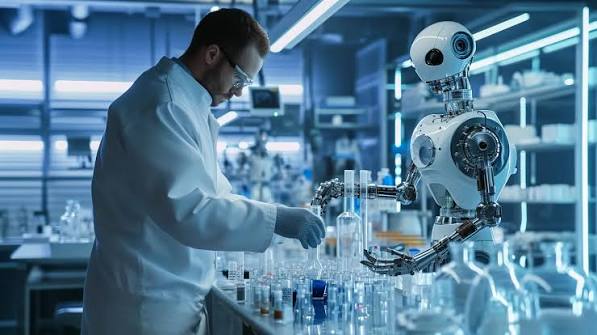
- 4. Virtual Laboratories: Digital simulations allow students to explore scientific experiments, understand laboratory procedures and observe phenomena in a controlled virtual environment.
- 5. Engineering and Innovation: AI supports computer-aided design, robotics, automation, modelling and innovative problem-solving activities.
- 6. Coding and Computational Thinking: Students can develop programming abilities, understand algorithms and explore data science using AI-supported learning platforms.
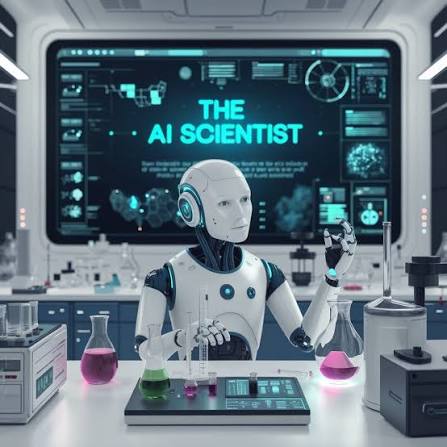
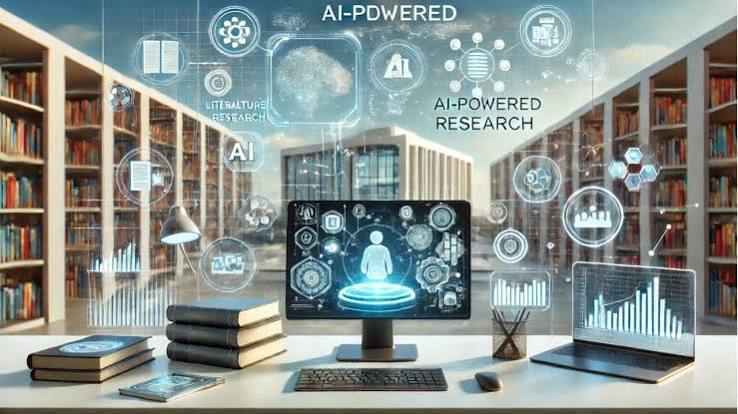
- 7. Research and Scientific Discovery: AI helps learners explore scientific literature, analyse datasets, identify patterns and develop research-oriented thinking.
Essential AI Tools for STEM Students
Modern students can explore several digital platforms:
- ChatGPT: Concept explanations, brainstorming and academic assistance.
- Wolfram Alpha: Mathematical calculations and computational problem-solving.
- PhET Simulations: Interactive learning in Physics and Chemistry.
- GeoGebra: Mathematical visualisation and geometric modelling.
- Google Colab: Learning Python programming and data analysis.
- MATLAB: Numerical computing, modelling and engineering applications.
- Tinkercad: Exploring digital circuit design and 3D modelling.
Skills Students Must Develop for the Future
To become future-ready, STEM students should focus on:
- AI literacy and digital competence.
- Critical thinking and analytical reasoning.
- Creativity and scientific curiosity.
- Data interpretation and problem-solving.
- Research methodology and experimentation.
- Communication, teamwork and ethical responsibility.
Challenges: Technology with Responsibility
AI-generated information may contain errors, biased outputs or misleading conclusions. Excessive dependence can also weaken independent thinking. Therefore, teachers must encourage verification, practical experimentation, academic integrity and responsible technology usage.
The Road Ahead
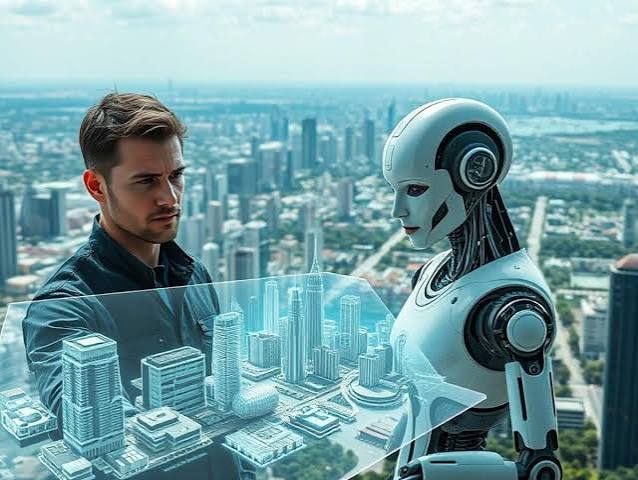
The future of STEM education will not be defined by technology alone, but by how effectively human intelligence collaborates with artificial intelligence.
Educational institutions must prepare students through AI workshops, interdisciplinary projects, practical training and industry-oriented learning.
Remember: AI will not replace the curious mind of a scientist; it will empower that mind to explore questions that were once beyond imagination.
Think Beyond Textbooks. Learn Beyond Boundaries. Innovate with AI. Shape Tomorrow!