Digital Tools Every Modern Chemistry Student Should Master
Can you visualise a complex molecule in three dimensions, predict a chemical reaction using Artificial Intelligence, analyse an IR spectrum digitally or perform a virtual laboratory experiment without entering a physical laboratory? Today, technology is making all this possible!
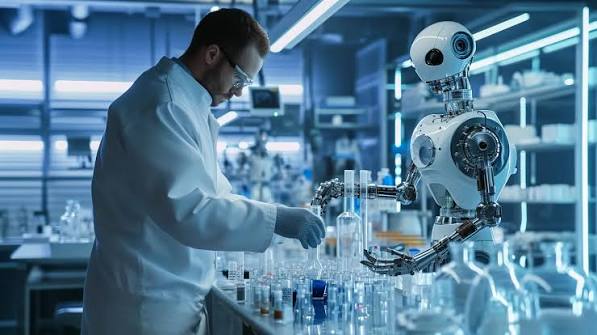
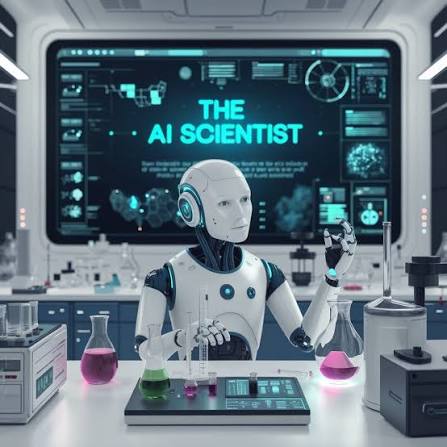
Chemistry is no longer confined to textbooks, blackboards and laboratory glassware. The modern chemistry classroom is becoming increasingly digital, where scientific knowledge combines with computational tools, interactive simulations and Artificial Intelligence (AI).
For today's chemistry students, mastering digital tools is not just an additional qualification; it is an essential step towards becoming future-ready scientists and researchers.
10 Digital Tools Every Chemistry Student Should Know
Here are some powerful digital platforms that can transform the way students learn, practise and explore Chemistry:
· 1. ChatGPT – Your AI Learning Assistant: Understand difficult concepts, practise numerical problems, generate quizzes and explore research ideas. Always verify scientific answers.
· 2. ChemDraw – Digital Chemical Drawing: Draw molecular structures, represent chemical reactions and prepare professional chemical diagrams.
· 3. MolView – Explore Molecules in 3D: Visualise molecular structures, chemical bonding, functional groups and three-dimensional arrangements.
· 4. PubChem – Your Chemical Information Library: Explore molecular formulas, chemical properties, structures, biological activities and scientific references.
· 5. Wolfram Alpha – Scientific Problem Solver: Perform mathematical calculations, explore equations and solve complex scientific problems.
· 6. PhET Interactive Simulations – Virtual Science Laboratory: Understand chemical equilibrium, molecular interactions, acids, bases and other scientific concepts through interactive simulations.
· 7. Gaussian – Computational Chemistry: Explore molecular modelling, quantum chemistry and computational analysis.
· 8. RDKit – Cheminformatics Toolkit: Work with molecular structures, chemical databases and computational chemistry applications.
· 9. Origin – Scientific Data Analysis: Create graphs, analyse experimental observations and present laboratory results professionally.
· 10. Microsoft Excel – Research Data Management: Organise experimental readings, perform calculations, analyse datasets and prepare scientific charts.
Why Should Chemistry Students Master These Tools?
Learning digital technologies offers several advantages:
· Better Conceptual Understanding: Visualise complex chemical phenomena.
· Smart Learning: Access personalised explanations and practice materials.
· Research Readiness: Develop familiarity with scientific databases and computational tools.
· Laboratory Efficiency: Improve data recording, calculations and analysis.
· Career Development: Build digital competencies relevant to pharmaceutical industries, research laboratories and higher education.
A Smart Strategy for Students
Start with three tools: ChatGPT for conceptual learning, ChemDraw for molecular structures and Excel for experimental data analysis. Gradually explore simulations, computational chemistry and specialised research platforms.
Remember, digital tools cannot replace laboratory experience, scientific curiosity or fundamental chemical knowledge. AI-generated information must always be critically evaluated and scientifically verified.
The Future Chemist Is Digital!
The chemistry professional of tomorrow will combine theoretical knowledge, practical laboratory skills, computational abilities and responsible AI usage.
Don't just study Chemistry. Visualise it, calculate it, simulate it, analyse it and innovate with it!
Learn Chemistry. Master Technology. Become a Future-Ready Scientist.