AI Literacy For Future Scientists
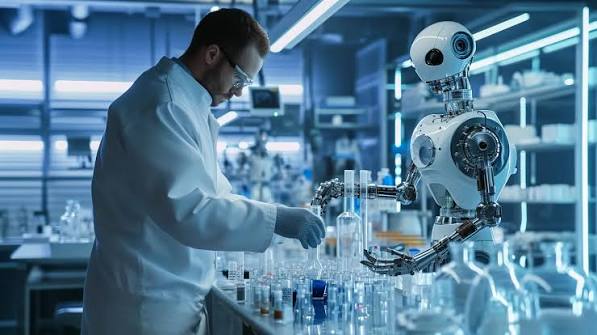
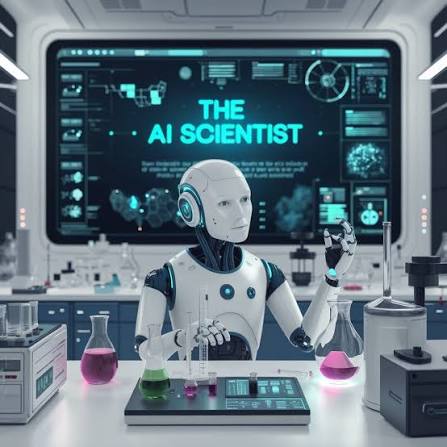
Imagine a chemistry student predicting a chemical reaction using AI, a biology researcher identifying disease patterns through intelligent algorithms, or a physics student exploring complex scientific problems with AI-powered simulations. What once seemed like science fiction is rapidly becoming a reality.
Artificial Intelligence (AI) is transforming the scientific world. From laboratories to space research, AI is helping scientists analyse enormous datasets, accelerate experiments and discover solutions to complex problems. In this changing environment, one question becomes increasingly important: Are today's science students prepared to become tomorrow's AI-enabled scientists?
Why Does AI Literacy Matter?
AI literacy is not simply about using ChatGPT or learning prompt engineering. It means understanding how intelligent technologies work, interpreting their outputs and applying them responsibly.
Future scientists must develop the following essential competencies:
- AI Awareness: Understand the fundamentals of Artificial Intelligence, Machine Learning and emerging intelligent technologies.
- Data Literacy: Learn how to collect, organise, interpret and analyse scientific data.
- Prompt Engineering: Develop the ability to communicate effectively with AI tools to obtain meaningful scientific insights.
- Critical Thinking: Question AI-generated information, identify errors and verify scientific findings.
- Computational Skills: Explore simulations, digital modelling and AI-powered scientific applications.
- Research and Innovation: Use AI to identify research gaps, generate hypotheses and explore new possibilities.
- Ethical Responsibility: Understand data privacy, research integrity, intellectual property and responsible AI usage.
AI Across Different Scientific Disciplines
The impact of AI can be understood through its applications in different branches of science:
- Chemistry: Predicting molecular structures, analysing reactions and supporting drug discovery.
- Biology: Studying genetic information, identifying disease patterns and analysing microscopic images.
- Physics: Conducting simulations, analysing astronomical data and exploring complex physical phenomena.
- Mathematics: Solving advanced problems, visualising equations and developing computational models.
- Environmental Science: Monitoring climate change, predicting environmental risks and analysing pollution patterns.
What Should Educational Institutions Do?
Colleges and universities must prepare students for an AI-driven scientific future through:
- Regular AI awareness and prompt engineering workshops.
- Hands-on training with AI-powered scientific tools.
- Interdisciplinary projects combining science, technology and data analytics.
- Research-based learning and practical problem-solving activities.
- Industry interaction, internships and innovation-driven assignments.
The Biggest Challenge: Think, Don't Just Trust!
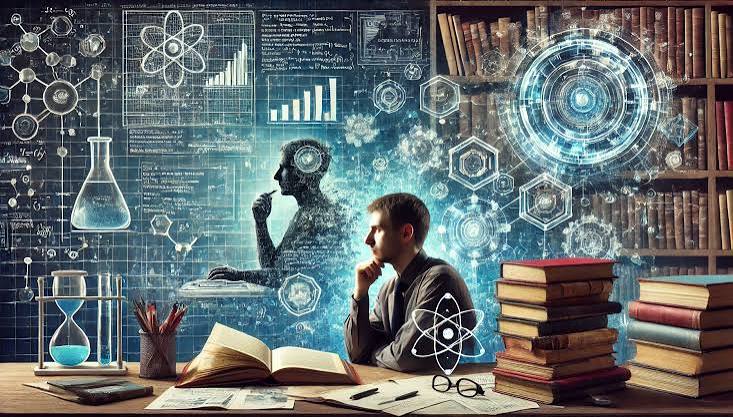
AI can generate answers within seconds, but not every answer is accurate. Students must learn to verify information, examine evidence and develop independent scientific judgement. AI should become a learning partner, not a substitute for human intelligence.
The Road Ahead
The future scientist will need more than a degree. Scientific knowledge, analytical abilities, digital competence, creativity and ethical awareness will define professional excellence.
Remember: The future will not belong to those who simply use AI, but to those who understand it, question it and transform it into meaningful scientific discoveries.
Learn Science. Understand AI. Question Everything. Discover Tomorrow.