The Impact of Artificial Intelligence on Scientific Innovation
What if a scientist could analyse thousands of experiments in minutes, predict the outcome of a chemical reaction before entering a laboratory, or identify a potential medicine through intelligent algorithms? What once appeared impossible is now becoming a reality with Artificial Intelligence (AI).
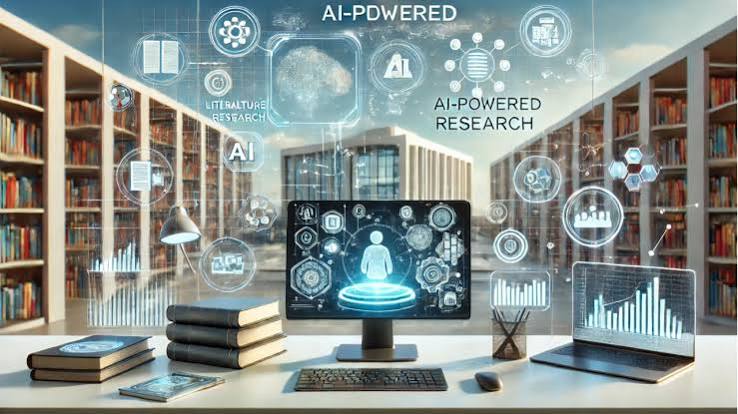
Science has always progressed through curiosity, observation, experimentation and discovery. Today, AI is adding a powerful new dimension to this journey. It is transforming traditional research methods into faster, smarter and more data-driven processes. From microscopic discoveries to space exploration, AI is opening doors to scientific possibilities that were previously beyond human capacity.
How Is AI Transforming Scientific Innovation?
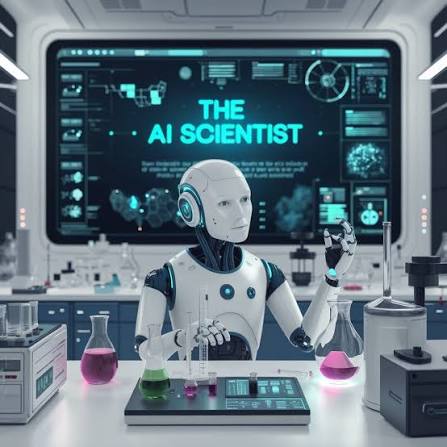
AI is not merely another technological invention; it is becoming a powerful research partner. Its contribution can be understood through several important applications:
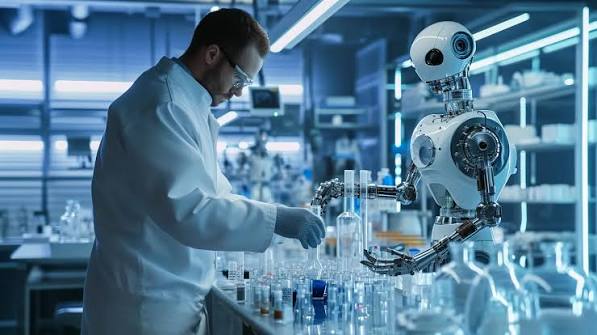
· Revolutionising Laboratory Research: AI-powered instruments and robotic systems automate repetitive experiments, monitor experimental conditions and improve research accuracy.
· Accelerating Drug Discovery: Machine learning helps researchers identify promising drug candidates, predict molecular behaviour and explore new possibilities in medical science.
· Advancing Chemistry: AI assists in predicting chemical reactions, designing new molecules, analysing compounds and developing innovative materials.
· Transforming Biology: Intelligent algorithms support DNA sequencing, genetic research, disease detection and analysis of complex biological systems.
· Exploring the Universe: AI helps astronomers analyse satellite images, identify celestial objects and process enormous amounts of astronomical data.
· Solving Complex Mathematical Problems: AI-powered applications support mathematical modelling, simulations, computational analysis and advanced problem-solving.
· Protecting the Environment: AI-based prediction systems help monitor climate change, forecast natural disasters, analyse pollution and support sustainable development.
Why Is AI a Game Changer for Scientists?
The real strength of AI lies in its ability to connect information, recognise patterns and generate useful predictions.
Its major advantages include:
1. Speed: Reduces the time required for complex data analysis.
2. Accuracy: Helps identify patterns and minimise certain human errors.
3. Efficiency: Saves research time, resources and experimental costs.
4. Prediction: Enables researchers to explore possible outcomes before conducting experiments.
5. Innovation: Encourages new research approaches and interdisciplinary discoveries.
Challenges: Innovation Needs Human Intelligence
Despite its enormous potential, AI has limitations. Incorrect datasets, biased algorithms, cybersecurity threats and misleading outputs can affect scientific conclusions. Therefore, human supervision, experimental validation, ethical responsibility and critical thinking remain essential.
The Future: Human Intelligence Meets Artificial Intelligence
Tomorrow's scientific breakthroughs will emerge from collaboration between curious human minds and intelligent machines. Educational institutions must prepare students through AI literacy, practical workshops, research projects and interdisciplinary learning.
The ultimate message is simple: AI may accelerate scientific discovery, but human curiosity gives discovery its direction. The future belongs to scientists who can question intelligently, think critically and innovate responsibly.